Hoar Cross was part of Needwood Forest, the 11th century lands of Henry de Ferrers. The land was passed down to Henry’s son and subsequent various people over the course of 500 years ending with the Webb family, around the 1730s, who bought the land and house known as the Manor of the Cross. This was quite a large house built on a hill near Yoxall (which is the village next to Hoar Cross). In 1740 the manor house was demolished and later the Hon. Charles Talbot bought the estate for £17,000. Eventually it was sold to Hugo Meynell, who already owned huge amounts of property all over the county and was now about to add another one to his portfolio.
This branch of the Meynell family originated from Leicestershire, namely Quorndon. In the 18th century Hugo Meynell had the title of ‘the father of fox-hunting’ as he had founded the Quorn Hunt in 1750 which became famous around the district. He bred his own strain of foxhounds and was the first person to study fox-h
unting from a scientific point of view. He bought Quorn Hall in 1754 and built stables and kennels there, having 30 horses stabled at its height. In 1758 he became High Sheriff of Staffordshire and Member of Parliament for Lichfield. When his son, Hugo, died in 1800 he sold Quorn Hall to the Earl of Sefton and left to live in Derbyshire; although the family owned large amounts of property all over the Midlands in at least five shires.
The Meynell family claim to be descendants of the Norman baron, Hugo de Grand Mesnil, who came over with William the Conqueror. He is said to have died in Leicester in 1093 and his descendants settled in Derbyshire and Yorkshire. The sons of Hugo went off to the First Crusade and a representation of Hugo’s shield can be seen in one of the windows of Hoar Cross Church. Sir Hugo de Mesnil of Langley Mesnil represented his county under Edward III in five parliaments and thus started a long line of descent for the Mesnil family eventually changing the name to Meynell in the 1600s.
In 1782 Hugo married Elizabeth Ingram Shepheard, daughter and co-heiress of Charles Ingram, 9th Viscount Irwin and Lord Ingram. Temple Newsam in Yorkshire was their family seat and through the marriage the Meynell family inherited the Ingram estates in Lincolnshire. When the Hall was built in 1871 it was actually modelled on a wing of the Temple Newsam house, which is why they look so similar. In 1793, after buying the Hoar Cross estate from the Talbots, Hugo built a house which he used as an occasional hunting lodge. He called it Old Hall and this was built around a small courtyard about half a mile away from where the Hall would later be built. Hugo and Elizabeth had six children, the eldest child also being called Hugo, as was usual in those days. Hugo Charles went on to marry Georgiana Pigou of London in 1819 and their eldest son Hugo Francis was the last of the descendants of Sir Arthur Ingram to inherit Temple Newsam. He married the Hon. Emily Charlotte, daughter of the 1st Viscount Halifax, in 1863 and together they built the present Hoar Cross Hall to be their family home.
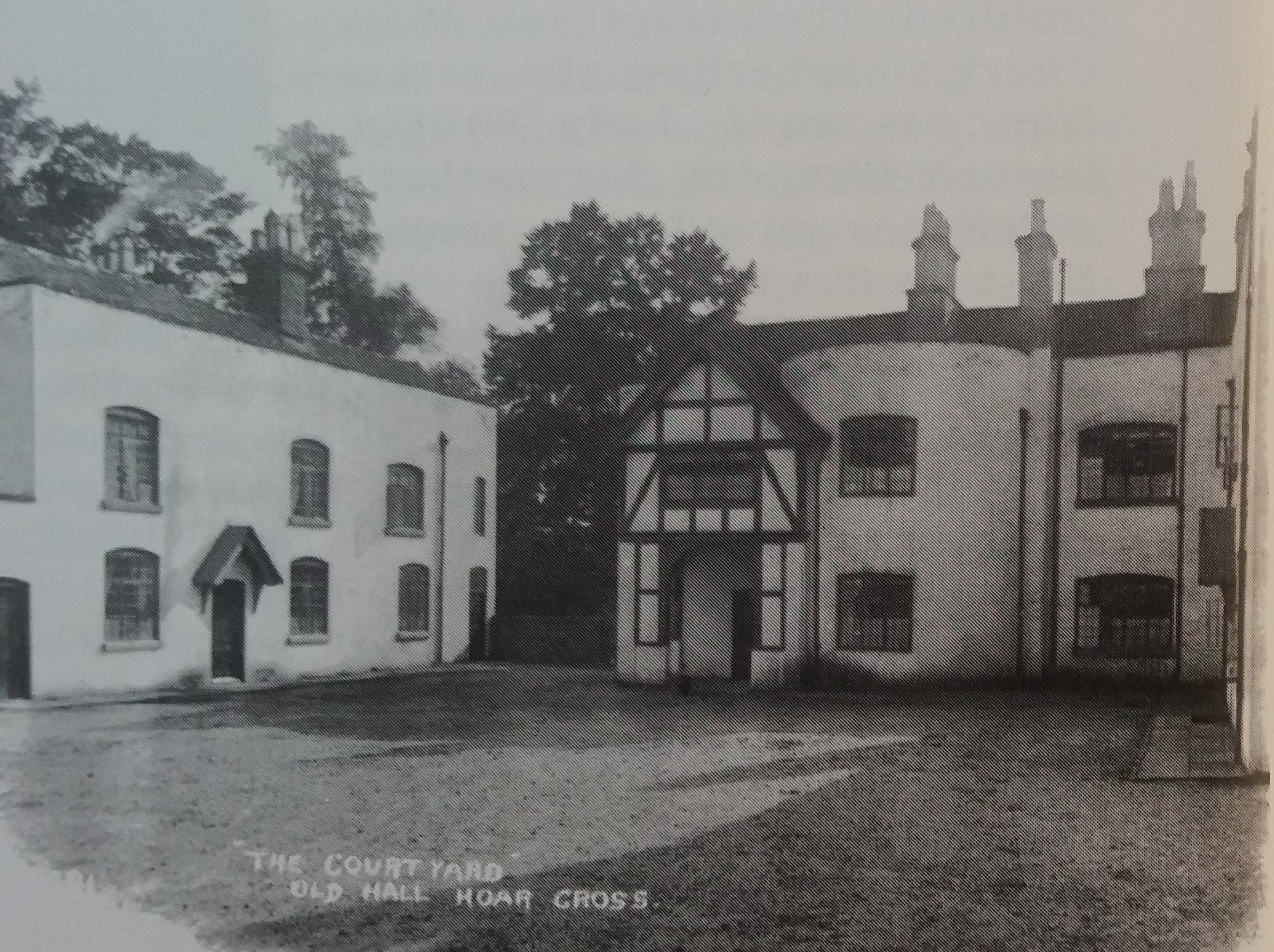
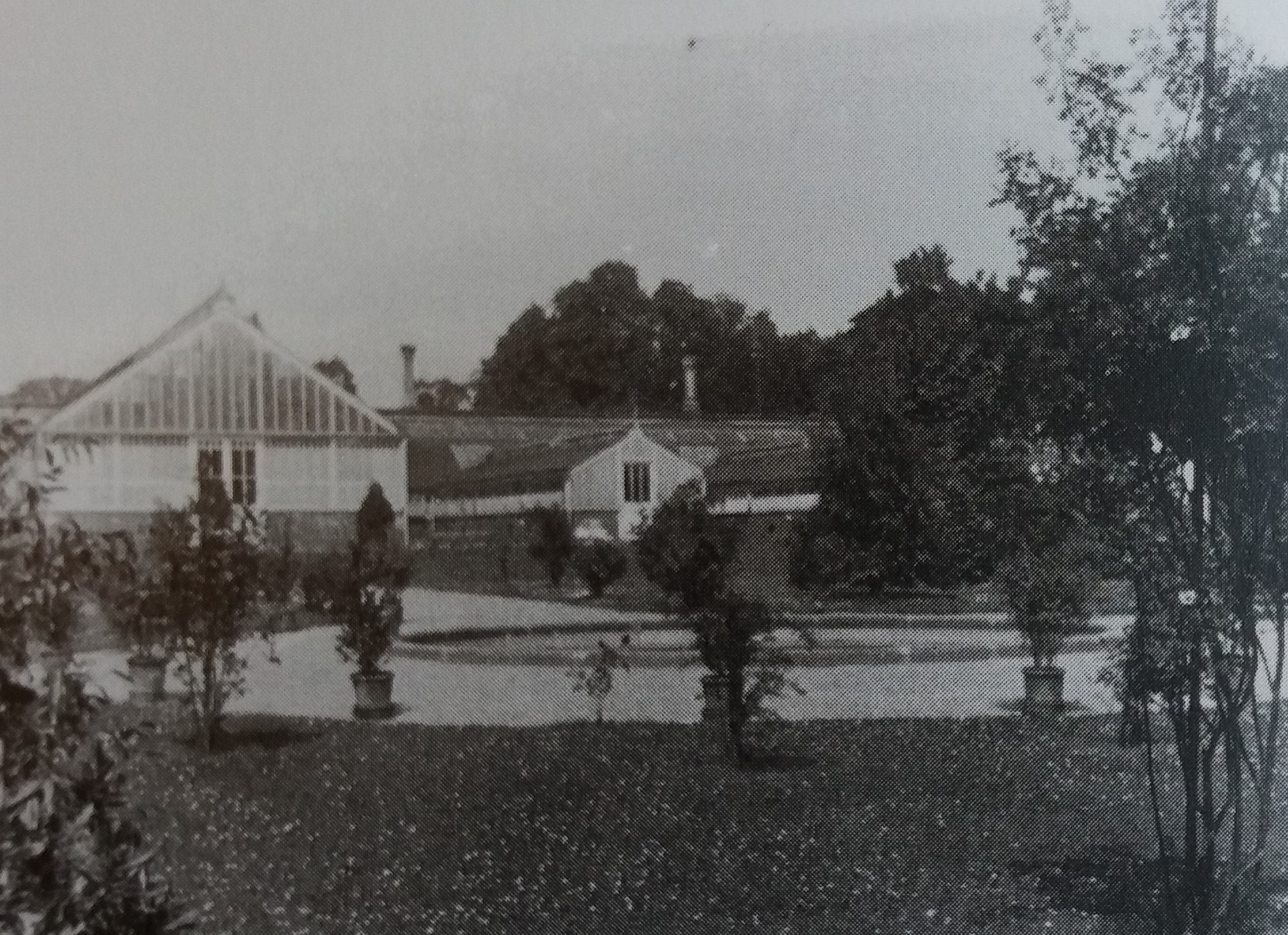
The Hall took nearly 10 years to build and was completed in 1871, although Hugo and Emily had already moved in before that. After their marriage they had lived at Old Hall while a temporary home was being built for them at Cross Hayes, between Yoxall and Hoar Cross. There they lived until the Hall was ready for them as other family members were also living at Old Hall and they wanted a place of their own. The house was south facing in extensive grounds covering many acres. The property was entered through an archway which had a Lodge to one side and a Gatehouse at the other side. A long drive travelled down towards the house bordered by woods and bushes on either side. To the front of the house near the driveway were two large ponds and a pumping station, hidden by the trees, which was used to pump water to the main house each day. I think it was also to be used in the event of a fire – they had certainly thought of everything! To the side of the gardens were tennis courts and further into the woods were the greenhouses and a palm house; behind these were the walled kitchen gardens. Next to the kitchen garden was the stable block which was also south facing and built in a U-shape. This would have stabled many horses with living accommodation above for the grooms and stable boys. There was also a paddock behind this for exercising the horses. Various cottages were also built on the estate for the workers to live in so all in all it must have been quite an impressive set-up.
But tragedy was to strike; Hugo had had a horse riding accident some fourteen months previously which had left him bed-ridden. However, they moved into the house but he sadly died in May of 1871. As they had no children, the Meynell line (of Hoar Cross) became extinct. Emily inherited the Temple Newsam estate along with many other estates around the Midlands and became a very wealthy woman – they say she was a millionairess twice over! Although she was now on her own, she had a lot of support from her family. Her brother Frederick moved in with her, and she ran the estates quite well, leaving them in a much improved condition. Emily turned Old Hall into a boys home called ‘The Home of the Good Shepherd’ and this eventually became a mixed children’s home run by a Mr and Mrs Glass in the seventies. It is now a nursing home.

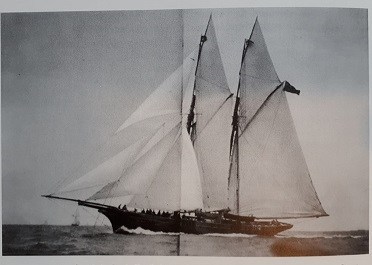
Emily also owned a house in Eaton Square, London, a villa in Florence and a yacht called 'Ariadne' which was a fully-crewed schooner of 380 tons with over 20 staff on it. She also had a small chapel made on the yacht and would often take her local vicar on trips with her so they could hold services for her and the crew. Every spring she would go on a cruise around the Mediterranean and sometimes across to the Netherlands and Germany. She loved painting and would spend much of her time doing water colours along with collecting beautiful objects to decorate the Hall and the Church of the Holy Angels. In 1890 she went on a painting trip up the River Nile on her yacht and filled 10 books of diaries and logs, all illustrated with her drawings and photographs. There were many more trips that the Meynells went on and we found a huge collection of photographs in the Library from those times. Although I’m not sure where they were taken exactly, it looks as though they travelled around the British Empire quite a lot.
In order to keep the Meynell name Emily’s brother changed his name from Wood to Meynell upon her death in 1904, thus keeping the name in the family. This was quite common at this level of society if you wanted to keep a family name. In 1878 Frederick married Lady Mary Lindsay, the third daughter of the Earl of Crawford and Balcarres. Just as an aside, Mary’s sister, Annie, married Frank Bowes-Lyon (second son of the Earl of Strathmore) who went on to have a niece, Elizabeth Bowes-Lyon, who later married George VI and became our Queen then our Queen Mother! Another royal connection!
Frederick and Lady Mary had five children: Francis, Robert, Everard, Charles and Margaret. When Frederick passed away in 1910, aged 61, Francis inherited the Staffordshire and Lincolnshire estates. All the sons served in the First World War and even Margaret served with the Red Cross as a volunteer. Francis married Lady Dorothy Legge in 1907, the elder daughter of the 6th Earl of Dartmouth. On the death of his father they moved into Hoar Cross Hall and raised their family of five children. Sadly, one of their children died aged 8 years. In 1919 Lady Dorothy founded the Hoar Cross Women’s Institute. As well as this she was a County Magistrate and devoted a lot of her time to the Red Cross Society. She was also a very knowledgeable horticulturist and so was very keen to tame some of the more ‘wild’ areas in the Hall gardens. She was especially interested in a sunken area near the church which she made into a sunken garden, surrounding it with rhododendron bushes and filling the middle part with wild flowers. Stone steps descended down onto a path which led to a stone seat in the middle of one side of the garden; it must have been a very private and quiet place to sit and relax in during the summer months.

Lady Dorothy’s daughter, also called Dorothy, was born in 1908 and was an accomplished pianist and conductor of the Hoar Cross choral society and had a life long interest in the arts and music. She also played the pipe organ in the chapel at the Hall for the morning services there. However, this young lady didn’t want to conform to the usual things of her society such as parties and husband hunting! She begged her parents to let her train for some useful occupation and they finally agreed to let her train as a secretary in London. She went on to become the private secretary to the Bishop of Portsmouth. Dorothy never married and when the Second World War started she returned to Hoar Cross and joined the Joint War Organisation of the Red Cross and St John which meant travelling overseas to Africa, Sicily and Italy. In 1944 Lady Dorothy left Hoar Cross, as she was now a widow, and went to live in Richmond Green in Surrey and this is where her daughter went to live after she had finished her travels. In 1947 Dorothy became a Lady-in-Waiting to H.R.H. The Princess Alice, Duchess of Gloucester at St James’s Palace for 12 years until her retirement. Many years later she came to visit us at the Hall and gave us a small wooden box which had paintings of the Hall on each side of it. It was such a unique thing that somebody had made and a beautiful gift so we put it on show in the Library for all to see.

Hugo was the eldest son of Francis and Lady Dorothy and attended Eton College as did a lot of the Meynell sons. He served in the Second World War and was awarded the Military Cross although he was seriously injured at El Alamein. He married Dorothy Jean Goshen (known as Jean) in 1936 and together with their five children they lived at Hoar Cross until 1952 when they left to live at the nearby village of Newborough; sadly, they were the last Meynell family to live at the Hall. Colonel Hugo Meynell died in 1960 and his wife Jean in 1993. After they left the Hall they sold all the contents and tried to sell the house but were unable to do so, deciding instead to rent it to a local consultant and his wife from nearby Burton-on-Trent Hospital, who stayed for nearly 10 years. After they left in the sixties a monastic community took on the Hall intending to turn it into a Christian Community Centre and started a development plan for raising the required monies. The monks had full use of the Hall and lived in the Lodge and Gatehouse. Before they received the funding they started their building work, demolishing the kitchens and laundry rooms at one end of the house as this was going to be a swimming pool. However, the funding never transpired and they were asked to leave in 1969, leaving the house unfinished and the gardens in sad neglect.
In 1970 my parents, William and Gwynyth Bickerton-Jones bought the Hall and we settled there for nearly 20 years until it was sold and became the Spa Hotel that you see today.
Don’t miss next week’s instalment: 'The Church of the Holy Angels'
If you would like to follow my story from the beginning click here and please feel free to share with your friends.
Follow me on a personal tour of my childhood home on YouTube.
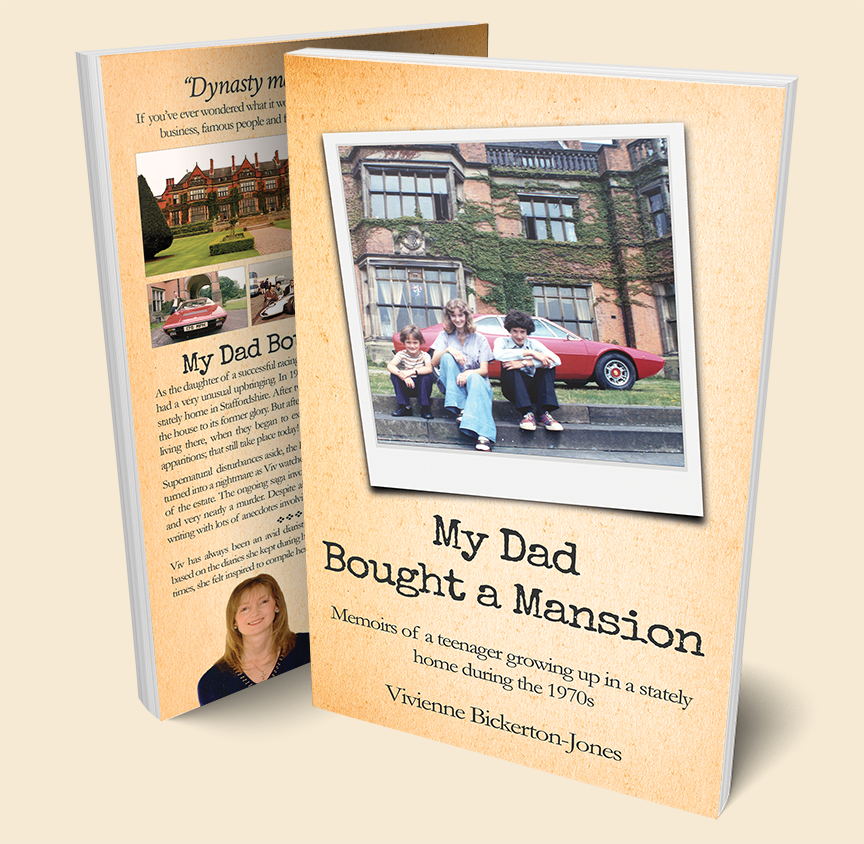
OUT NOW!! 'My Dad Bought a Mansion' book is available on Amazon.
Leave a comment Like Back to Top Seen 787 times Liked 1 times
Subscribe to Updates
If you enjoyed this, why not subscribe to free email updates and join over 354 subscribers today!
Subscribe to Story updates
Alternatively, you can subscribe via RSS 
All email subscriptions must be confirmed to comply with GDPR.
Related Posts
Viv Wilson | 29th October 2025 | Growing Up In a Stately Home
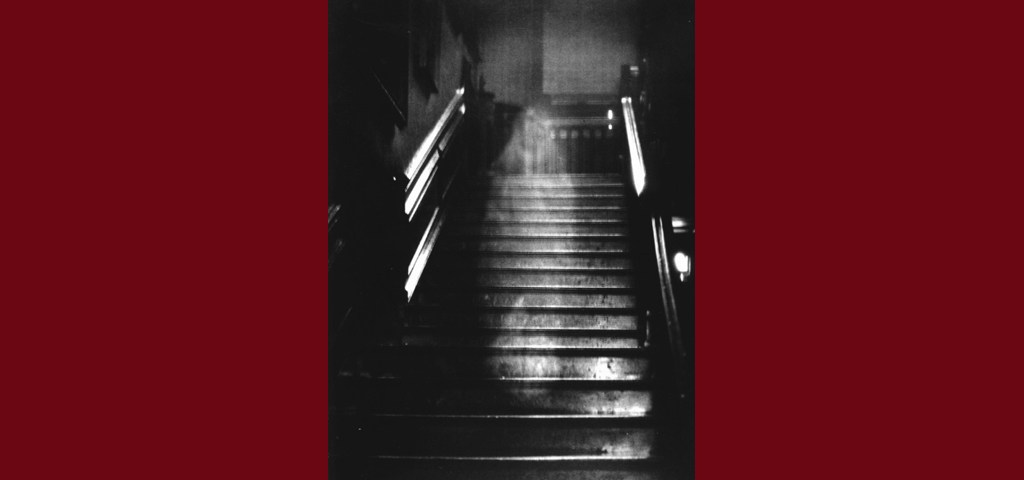
Going to sleep in a big old house is quite scary when you’re young but going to sleep in a big old house that’s haunted is even more scary!! As we approach Hallowe'en my mind has gone back to that first winter at Hoar Cross Hall and all the scary things that happened - and that was without any trick or treaters in those days! We quickly realised that we weren’t the only inhabitants of the house when we moved there in the 1970s. Every time there was a windy night I could hear a window banging in the attic – all night long it kept me awake. The next day I would go upstairs to the attics to close it but there would be no windows open or even loose. They were all tightly shut as they had been for the previous 20 years, when the house had stood empty. I remember standing there in the attic rooms feeling a tingling down my spine and goose bumps all over as I felt the atmosphere closing in on me - and I quickly legged it back downstairs! On other nights we would hear people walking along the attic corridor (the attic, by the way, was the floor right above our bedroom floor) and then at other times we could hear heavy furniture being dragged about – yet there was nothing up there as the rooms were all empty! How strange! Other members of the family heard it too and also people that stayed overnight, so it wasn’t the imaginings of a frightened child. There was also nobody else in the house at that point, apart from our family and they definitely weren’t walking about the house at 3am. And why is it that these things always happen in the middle of the night? When it’s dark. When we feel most scared? I often woke up at 3am whether there were noises or not – or perhaps there had been a noise and that’s what had woken me up – who knows? I also loved reading books about old houses, mysteries and ghosts but when you actually live in one in real life, it’s a bit different! The spooky attic The first few years at Hoar Cross Hall were the worst ones for spiritual activity - maybe we'd disturbed the ghosts who were used to an empty house and not one with children running about everywhere! Our family consisted of my mother, father and two younger brothers; my parents being members of the Historical Society were keen to buy a house to show my dad's huge arms and armour collection along with many antiques. But we hadn't bargained with the house being haunted! My mum was often woken up by the sight of a little girl ‘floating’ over the bed. She said the girl was wearing a long nightdress and mop cap and seemed to be stretching her arms out to my mum as if she was asking for help. She floated all around the bed scaring my mum half to death. Frantically she tried to wake my dad while the ghoulish girl reached out - by the time my dad was awake the child was fading away and he missed it all! If you haven’t already worked it out, long nighties and mop caps were the ‘go to’ fashion trend back in the Victorian days! She saw her a few times on the staircase too just standing in the corridor before fading away. This made me terrified to go upstairs to bed on my own and once inside my room I would lock the doors and burrow down under the blankets so I wouldn't see or hear anything - quite forgetting that ghosts can walk through walls! The haunted bedroom corridor When I got older it was great to have parties in the attics as we could play our rock music really loud and no-one would hear it! My dad had made the west wing of the house (the old Victorian nurseries) into an apartment which we rented out and it was here that my 18th birthday was celebrated as we had become friends with the people that lived there. As everyone had heard about the ghost stories at the Hall, we made an ouija board and tried to contact the spirits. Most people had had a few spirits of a different kind by then and we sat around the table watching the glass move aroun...
Viv Wilson | 24th September 2025 | Growing Up In a Stately Home
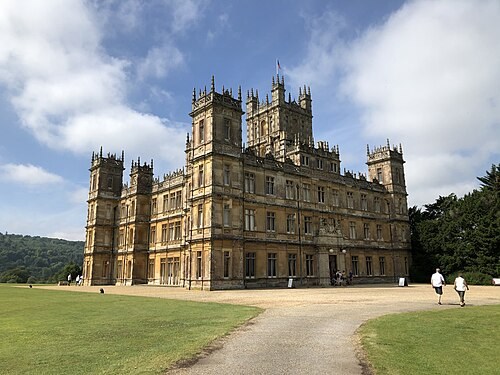
With the new Downton Abbey film out this month I thought I would do a comparison of the two family homes, Downton and Hoar Cross Hall, the latter being my old family home for those of you who are new to these blogs. Although Downton Abbey is fictional, the house on which it is based is not, it being Highclere Castle in Hampshire which was built in 1679 and is owned by the Earl of Carnarvon. Hoar Cross Hall was the original home of the Meynell Ingram family who first came from Leicestershire and was built in 1863. Hugo Meynell of Quorndon was the High Sheriff of Staffordshire and Member of Parliament for Lichfield and the family owned considerable property in Staffordshire, Shropshire and Derbyshire. He bought the Hoar Cross estate in 1793 and built a hunting lodge there known as Old Hall and founded the Meynell Hunt. It seemed the family lived here for many years until Hugo’s grandson, also Hugo, got married in 1863 and decided to build the present Hall for him and his wife, Emily Charlotte. The house took nine years to build and was eventually finished in 1871. Hugo and Emily had already moved in, but their new life together was soon to be cut short by a tragic accident. Fourteen months earlier at Birch Wood on their estate Hugo had a horse riding accident and had been bed-ridden ever since – he died in May of that year. They had no children and Emily built The Church of the Holy Angels in the grounds of the hall in memory of her husband. This is the church that I got married in over a hundred years later. On Hugo’s death Emily inherited the family's many large estates and they say she was a double millionairess – which in those days was a huge amount of money! Emily Charlotte The original site of Highclere Castle was recorded in the Doomsday Book of 1086 when an Anglo-Saxon king granted the estate to the Bishops of Winchester and in the 14th century a palace was built there by the Bishop. However, it was confiscated during the Reformation by Henry VIII. Later it was rebuilt in 1679 by Sir Robert Sawyer, Attorney-General to Charles II and looks to have stayed in his family ever since. The Downton Abbey story seems to be very similar to the Highclere Castle one actually! In the early part of the 20th century Downton is owned by the Earl of Grantham who marries an American heiress to save the family home. At about the same time Highclere was owned by the Earl of Carnarvon who also married the heiress to the Rothschild fortune and received a very large dowry. (In case you're wondering, a dowry is a sum of money or property given by the bride's family to the groom's family upon their marriage, and has historically been practiced by various cultures over the years). During the First World War, Highclere opened the house up as a hospital with the then Lady Carnarvon assisting as a nurse. In the Downton story Lord Grantham opens up the house to be used as a hospital for injured officers and some of the family assist in nursing them back to health. The Meynell family at Hoar Cross Hall also offered their home to be used as a hospital but were told that it was unsuitable owing to its isolation and inaccessibility in the country. However, Lady Mary Meynell opened her London home in Lennox Gardens to be used as a Military Hospital for officers during the First World War. Indeed, her own son, Francis, stayed there for a while recovering from severe wounds to the back in 1917, something which he never really recovered from resulting in his early death in 1941 at the age of 52. Hoar Cross Hall was too remote Although these aristocratic families seemed to live very charmed lives (and a lot of them did!) they also ran their estates to provide food and farm the land. This also gave local people much needed employment although being a domestic servant in those days could be quite hard with long hours and not much down time. However, they were families like the rest of us with the...
Viv Wilson | 19th August 2025 | Growing Up In a Stately Home
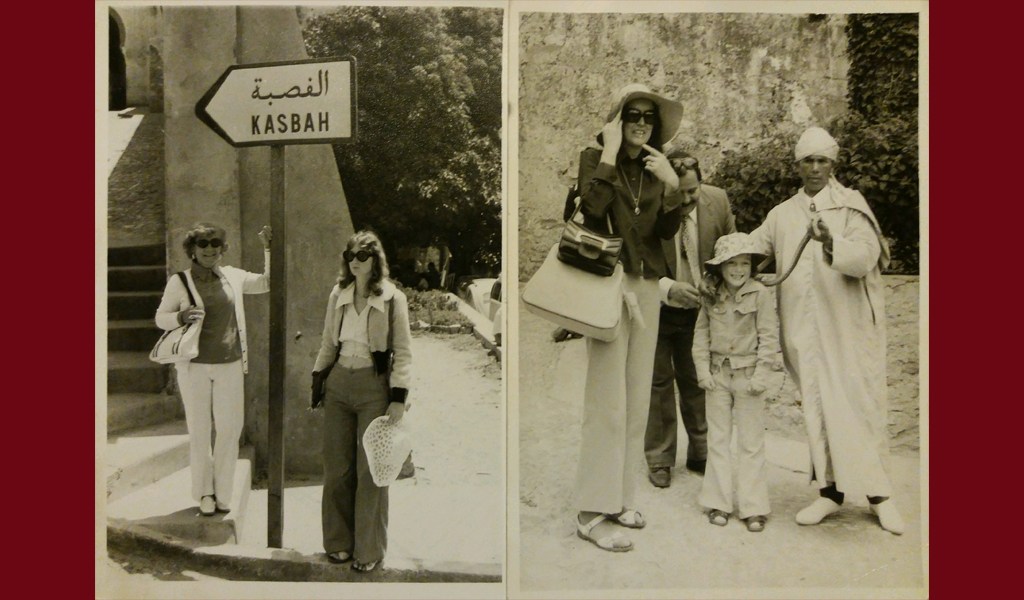
When Hugo and Emily Meynell built Hoar Cross Hall it included a whole estate with it, namely kitchen gardens, greenhouses, stables, a farm and cottages. This was quite common in those days as the estate supported the house with food etc and also gave employment to local people. Old Hall (their original home) was also on the estate and was accessed via a private road, which ran from the main road. By the time the 1970s came along the stable block and Old Hall were private houses and another part of Old Hall had been made into a children’s home. Emily Meynell had started this home in the Victorian days, calling it ‘The Home of the Good Shepherd’ but it was for boys only at that time. When we were there it was a mixed home and run by a husband and wife couple. They used to have fetes there in the summer and we would sometimes go round to play with the children, as they had lots of climbing frames and slides. The private road also joined up to our woods near the driveway and this is the road I walked along every day, up to the main road, to catch the bus to school in nearby Uttoxeter. It was about half a mile but I hated walking through the woods, especially in the winter when the mornings were darker. One day, whilst walking round Uttoxeter at lunchtime, I saw a newspaper board telling everyone about a streaker that had run through the town the day before – what was this? A man running naked for the fun of it? On further investigation I found that this was the latest craze from America – but why anyone would want to do it in our cold country was beyond me! Streaking comes to Britain! I was not an academic by any means and hated my schooldays. I was constantly being teased for being too thin, too quiet or for living in a stately home. (This was from the teachers too!) so when it was time for 'skools out for summer' I was more than ready to leave! By now the Mediaeval Banquets, which my parents ran in the house, were proving a huge success and as package holidays were becoming very popular my parents decided to book a two week holiday abroad. My dad had always wanted to go to Greece to see all the temples but was a bit disappointed when he got there. Most of the temples were in ruins and once you’ve seen one ruin you’ve pretty much seen them all! The Acropolis was quite impressive though. I loved being abroad – the weather was so hot and the sea was always warm. Cold climes don’t suit me as I feel the cold so much so I would always be outdoors as soon as the sun was out - most of my summer holidays were spent in the gardens weeding whilst listening to Radio 1 on my little portable radio, although usually I dreaded the school holidays as it meant I was stuck at home for six weeks, rarely seeing my friends. Ticket to the bullfight Because of the success of the banquets it meant we could go abroad every year and other holidays included trips to Majorca, Portugal and Spain. I remember in Majorca going on a lovely train ride through orange groves and gardens to the Caves of Drach – the scenery was stunning with mountains watching over us from their great height. In Portugal we went to see a bull fight which I found both thrilling and frightening all at once. The matadors came so close to the bull but I hated that they had to stab them first to make them angry – it seemed so cruel. In Spain we went to a club one night to see some flamenco dancing and they pulled me up onto the stage to join in which was fun, if unexpected! We also went on a day trip to Morocco and walked around the Kasbah, which was the local market (see header picture). I remember hoards of children following us around trying to sell us things. My dad noticed one of the stallholders smiling at me and said for a joke “You can have her for two camels”. Well, the man never left our side after that – he took it very seriously and followed us all round the market trying to n...
Viv Wilson | 25th June 2025 | Growing Up In a Stately Home

With the summer season well and truly upon us and Wimbledon almost here, I thought a blog about tennis might be in order! The game of tennis first started in the Mediaeval days and involved hitting a ball with a bare hand and later with a glove. By the 16th century the glove had become a racquet and the game had moved to an enclosed playing area and the rules had stabilized. This was known as ‘real tennis’. The word tennis came into use in English in the mid-14th century from French, via the Anglo-Norman term Tenez, which can be translated as 'hold', 'receive' or 'take', a call from the server to his opponent indicating that he is about to serve. It seems that royalty and the upper classes played tennis a lot, with Henry VIII making the biggest impact as a young monarch, playing the game with gusto at Hampton Court! However, the game was actually invented in Birmingham (England) and is the direct descendant of what is now denoted ‘real tennis’ or ‘royal tennis’ and continues to be played today with more complex rules. Many original courts still remain at Oxford, Cambridge, Falkland Palace in Fife, Scotland and Hampton Court Palace. Wimbledon itself is the oldest tennis tournament in the world and arguably the most famous. Since the first tournament 148 years ago in 1877, The Championships have been hosted by the All England Lawn Tennis and Croquet Club in Wimbledon, London and take place over two weeks in late June – early July. Tennis became popular because of the waning interest in croquet and the Club decided to organise a tennis tournament to pay for the repair of its pony roller, used to maintain the lawns. It must have been popular as its still going strong! Although you may enjoy the tennis I think people love the strawberries and cream too that are famously served there! Or you may like a tour around the museum - check it out here Wimbledon Many stately homes would have had tennis courts including Hoar Cross Hall. However, when we moved there in the 1970s you couldn’t see them at all as the grass had grown long and wild and it looked liked a wilderness. In fact, we didn’t even know that there were tennis courts there until Mrs Meynell, the previous owner, told us! Mowing the old tennis courts in 1984 Of course, back in the 1930s the younger members of the Meynell family often played on them during their weekend house parties (see header picture). One young man who became a close friend of the Meynell family made regular visits to Hoar Cross and recalled the happy times he spent there as “.....the last days of the traditional English country house with weekend parties full of gracious living and good company.” The people who came to the parties were usually young aristocrats such as Lady Diana Legge and her sister Lady Elisabeth Bassett, who was lady-in-waiting to the Queen Mother from 1959 – 1993, when she retired at the age of 85! (see below) Lady Elizabeth (in the dark dress) Am-dram at a weekend house party on the tennis courts! I remember Mrs Meynell recalling a funny story about when they moved out of the Hall to a smaller house in the neighbouring village. Apparently her husband had come home one day to tell her he’d bought the house (without even consulting her) and the reason was that it had hard tennis courts, 'so much better than our grass ones' he told her! How different things were in those days – however, the servants were very pleased about the move as it meant less rooms to clean! And also less mowing now that they had hard courts! Don't miss next month's blog: 'Summer Balls and Garden Parties' If you would like to follow my story from the beginning, please click here and feel free to share with your friends.Follow me on a personal tour of my childhood home on YouTube. Click here to view and subscribe to my channel.OUT NOW!! 'My Dad Bought a Mansion' book is available on Amazon....
Viv Wilson | 29th October 2025 | Growing Up In a Stately Home
Going to sleep in a big old house is quite scary when you’re young but going to sleep in a big old house that’s haunted is even more scary!! As we approach Hallowe'en my mind has gone back to that first winter at Hoar Cross Hall and all the scary things that happened - and that was without any trick or treaters in those days! We quickly realised that we weren’t the only inhabitants of the house when we moved there in the 1970s. Every time there was a windy night I could hear a window banging in the attic – all night long it kept me awake. The next day I would go upstairs to the attics to close it but there would be no windows open or even loose. They were all tightly shut as they had been for the previous 20 years, when the house had stood empty. I remember standing there in the attic rooms feeling a tingling down my spine and goose bumps all over as I felt the atmosphere closing in on me - and I quickly legged it back downstairs! On other nights we would hear people walking along the attic corridor (the attic, by the way, was the floor right above our bedroom floor) and then at other times we could hear heavy furniture being dragged about – yet there was nothing up there as the rooms were all empty! How strange! Other members of the family heard it too and also people that stayed overnight, so it wasn’t the imaginings of a frightened child. There was also nobody else in the house at that point, apart from our family and they definitely weren’t walking about the house at 3am. And why is it that these things always happen in the middle of the night? When it’s dark. When we feel most scared? I often woke up at 3am whether there were noises or not – or perhaps there had been a noise and that’s what had woken me up – who knows? I also loved reading books about old houses, mysteries and ghosts but when you actually live in one in real life, it’s a bit different! The spooky attic The first few years at Hoar Cross Hall were the worst ones for spiritual activity - maybe we'd disturbed the ghosts who were used to an empty house and not one with children running about everywhere! Our family consisted of my mother, father and two younger brothers; my parents being members of the Historical Society were keen to buy a house to show my dad's huge arms and armour collection along with many antiques. But we hadn't bargained with the house being haunted! My mum was often woken up by the sight of a little girl ‘floating’ over the bed. She said the girl was wearing a long nightdress and mop cap and seemed to be stretching her arms out to my mum as if she was asking for help. She floated all around the bed scaring my mum half to death. Frantically she tried to wake my dad while the ghoulish girl reached out - by the time my dad was awake the child was fading away and he missed it all! If you haven’t already worked it out, long nighties and mop caps were the ‘go to’ fashion trend back in the Victorian days! She saw her a few times on the staircase too just standing in the corridor before fading away. This made me terrified to go upstairs to bed on my own and once inside my room I would lock the doors and burrow down under the blankets so I wouldn't see or hear anything - quite forgetting that ghosts can walk through walls! The haunted bedroom corridor When I got older it was great to have parties in the attics as we could play our rock music really loud and no-one would hear it! My dad had made the west wing of the house (the old Victorian nurseries) into an apartment which we rented out and it was here that my 18th birthday was celebrated as we had become friends with the people that lived there. As everyone had heard about the ghost stories at the Hall, we made an ouija board and tried to contact the spirits. Most people had had a few spirits of a different kind by then and we sat around the table watching the glass move aroun...
Viv Wilson | 24th September 2025 | Growing Up In a Stately Home
With the new Downton Abbey film out this month I thought I would do a comparison of the two family homes, Downton and Hoar Cross Hall, the latter being my old family home for those of you who are new to these blogs. Although Downton Abbey is fictional, the house on which it is based is not, it being Highclere Castle in Hampshire which was built in 1679 and is owned by the Earl of Carnarvon. Hoar Cross Hall was the original home of the Meynell Ingram family who first came from Leicestershire and was built in 1863. Hugo Meynell of Quorndon was the High Sheriff of Staffordshire and Member of Parliament for Lichfield and the family owned considerable property in Staffordshire, Shropshire and Derbyshire. He bought the Hoar Cross estate in 1793 and built a hunting lodge there known as Old Hall and founded the Meynell Hunt. It seemed the family lived here for many years until Hugo’s grandson, also Hugo, got married in 1863 and decided to build the present Hall for him and his wife, Emily Charlotte. The house took nine years to build and was eventually finished in 1871. Hugo and Emily had already moved in, but their new life together was soon to be cut short by a tragic accident. Fourteen months earlier at Birch Wood on their estate Hugo had a horse riding accident and had been bed-ridden ever since – he died in May of that year. They had no children and Emily built The Church of the Holy Angels in the grounds of the hall in memory of her husband. This is the church that I got married in over a hundred years later. On Hugo’s death Emily inherited the family's many large estates and they say she was a double millionairess – which in those days was a huge amount of money! Emily Charlotte The original site of Highclere Castle was recorded in the Doomsday Book of 1086 when an Anglo-Saxon king granted the estate to the Bishops of Winchester and in the 14th century a palace was built there by the Bishop. However, it was confiscated during the Reformation by Henry VIII. Later it was rebuilt in 1679 by Sir Robert Sawyer, Attorney-General to Charles II and looks to have stayed in his family ever since. The Downton Abbey story seems to be very similar to the Highclere Castle one actually! In the early part of the 20th century Downton is owned by the Earl of Grantham who marries an American heiress to save the family home. At about the same time Highclere was owned by the Earl of Carnarvon who also married the heiress to the Rothschild fortune and received a very large dowry. (In case you're wondering, a dowry is a sum of money or property given by the bride's family to the groom's family upon their marriage, and has historically been practiced by various cultures over the years). During the First World War, Highclere opened the house up as a hospital with the then Lady Carnarvon assisting as a nurse. In the Downton story Lord Grantham opens up the house to be used as a hospital for injured officers and some of the family assist in nursing them back to health. The Meynell family at Hoar Cross Hall also offered their home to be used as a hospital but were told that it was unsuitable owing to its isolation and inaccessibility in the country. However, Lady Mary Meynell opened her London home in Lennox Gardens to be used as a Military Hospital for officers during the First World War. Indeed, her own son, Francis, stayed there for a while recovering from severe wounds to the back in 1917, something which he never really recovered from resulting in his early death in 1941 at the age of 52. Hoar Cross Hall was too remote Although these aristocratic families seemed to live very charmed lives (and a lot of them did!) they also ran their estates to provide food and farm the land. This also gave local people much needed employment although being a domestic servant in those days could be quite hard with long hours and not much down time. However, they were families like the rest of us with the...
Viv Wilson | 19th August 2025 | Growing Up In a Stately Home
When Hugo and Emily Meynell built Hoar Cross Hall it included a whole estate with it, namely kitchen gardens, greenhouses, stables, a farm and cottages. This was quite common in those days as the estate supported the house with food etc and also gave employment to local people. Old Hall (their original home) was also on the estate and was accessed via a private road, which ran from the main road. By the time the 1970s came along the stable block and Old Hall were private houses and another part of Old Hall had been made into a children’s home. Emily Meynell had started this home in the Victorian days, calling it ‘The Home of the Good Shepherd’ but it was for boys only at that time. When we were there it was a mixed home and run by a husband and wife couple. They used to have fetes there in the summer and we would sometimes go round to play with the children, as they had lots of climbing frames and slides. The private road also joined up to our woods near the driveway and this is the road I walked along every day, up to the main road, to catch the bus to school in nearby Uttoxeter. It was about half a mile but I hated walking through the woods, especially in the winter when the mornings were darker. One day, whilst walking round Uttoxeter at lunchtime, I saw a newspaper board telling everyone about a streaker that had run through the town the day before – what was this? A man running naked for the fun of it? On further investigation I found that this was the latest craze from America – but why anyone would want to do it in our cold country was beyond me! Streaking comes to Britain! I was not an academic by any means and hated my schooldays. I was constantly being teased for being too thin, too quiet or for living in a stately home. (This was from the teachers too!) so when it was time for 'skools out for summer' I was more than ready to leave! By now the Mediaeval Banquets, which my parents ran in the house, were proving a huge success and as package holidays were becoming very popular my parents decided to book a two week holiday abroad. My dad had always wanted to go to Greece to see all the temples but was a bit disappointed when he got there. Most of the temples were in ruins and once you’ve seen one ruin you’ve pretty much seen them all! The Acropolis was quite impressive though. I loved being abroad – the weather was so hot and the sea was always warm. Cold climes don’t suit me as I feel the cold so much so I would always be outdoors as soon as the sun was out - most of my summer holidays were spent in the gardens weeding whilst listening to Radio 1 on my little portable radio, although usually I dreaded the school holidays as it meant I was stuck at home for six weeks, rarely seeing my friends. Ticket to the bullfight Because of the success of the banquets it meant we could go abroad every year and other holidays included trips to Majorca, Portugal and Spain. I remember in Majorca going on a lovely train ride through orange groves and gardens to the Caves of Drach – the scenery was stunning with mountains watching over us from their great height. In Portugal we went to see a bull fight which I found both thrilling and frightening all at once. The matadors came so close to the bull but I hated that they had to stab them first to make them angry – it seemed so cruel. In Spain we went to a club one night to see some flamenco dancing and they pulled me up onto the stage to join in which was fun, if unexpected! We also went on a day trip to Morocco and walked around the Kasbah, which was the local market (see header picture). I remember hoards of children following us around trying to sell us things. My dad noticed one of the stallholders smiling at me and said for a joke “You can have her for two camels”. Well, the man never left our side after that – he took it very seriously and followed us all round the market trying to n...
Viv Wilson | 25th June 2025 | Growing Up In a Stately Home
With the summer season well and truly upon us and Wimbledon almost here, I thought a blog about tennis might be in order! The game of tennis first started in the Mediaeval days and involved hitting a ball with a bare hand and later with a glove. By the 16th century the glove had become a racquet and the game had moved to an enclosed playing area and the rules had stabilized. This was known as ‘real tennis’. The word tennis came into use in English in the mid-14th century from French, via the Anglo-Norman term Tenez, which can be translated as 'hold', 'receive' or 'take', a call from the server to his opponent indicating that he is about to serve. It seems that royalty and the upper classes played tennis a lot, with Henry VIII making the biggest impact as a young monarch, playing the game with gusto at Hampton Court! However, the game was actually invented in Birmingham (England) and is the direct descendant of what is now denoted ‘real tennis’ or ‘royal tennis’ and continues to be played today with more complex rules. Many original courts still remain at Oxford, Cambridge, Falkland Palace in Fife, Scotland and Hampton Court Palace. Wimbledon itself is the oldest tennis tournament in the world and arguably the most famous. Since the first tournament 148 years ago in 1877, The Championships have been hosted by the All England Lawn Tennis and Croquet Club in Wimbledon, London and take place over two weeks in late June – early July. Tennis became popular because of the waning interest in croquet and the Club decided to organise a tennis tournament to pay for the repair of its pony roller, used to maintain the lawns. It must have been popular as its still going strong! Although you may enjoy the tennis I think people love the strawberries and cream too that are famously served there! Or you may like a tour around the museum - check it out here Wimbledon Many stately homes would have had tennis courts including Hoar Cross Hall. However, when we moved there in the 1970s you couldn’t see them at all as the grass had grown long and wild and it looked liked a wilderness. In fact, we didn’t even know that there were tennis courts there until Mrs Meynell, the previous owner, told us! Mowing the old tennis courts in 1984 Of course, back in the 1930s the younger members of the Meynell family often played on them during their weekend house parties (see header picture). One young man who became a close friend of the Meynell family made regular visits to Hoar Cross and recalled the happy times he spent there as “.....the last days of the traditional English country house with weekend parties full of gracious living and good company.” The people who came to the parties were usually young aristocrats such as Lady Diana Legge and her sister Lady Elisabeth Bassett, who was lady-in-waiting to the Queen Mother from 1959 – 1993, when she retired at the age of 85! (see below) Lady Elizabeth (in the dark dress) Am-dram at a weekend house party on the tennis courts! I remember Mrs Meynell recalling a funny story about when they moved out of the Hall to a smaller house in the neighbouring village. Apparently her husband had come home one day to tell her he’d bought the house (without even consulting her) and the reason was that it had hard tennis courts, 'so much better than our grass ones' he told her! How different things were in those days – however, the servants were very pleased about the move as it meant less rooms to clean! And also less mowing now that they had hard courts! Don't miss next month's blog: 'Summer Balls and Garden Parties' If you would like to follow my story from the beginning, please click here and feel free to share with your friends.Follow me on a personal tour of my childhood home on YouTube. Click here to view and subscribe to my channel.OUT NOW!! 'My Dad Bought a Mansion' book is available on Amazon....
Recent Posts
Viv Wilson | 29th October 2025 | Growing Up In a Stately Home
Going to sleep in a big old house is quite scary when you’re young but going to sleep in a big old house that’s haunted is even more scary!! As we approach Hallowe'en my mind has gone back to that first winter at Hoar Cross Hall and all the scary things that happened - and that was without any trick or treaters in those days! We quickly realised that we weren’t the only inhabitants of the house when we moved there in the 1970s. Every time there was a windy night I could hear a window banging in the attic – all night long it kept me awake. The next day I would go upstairs to the attics to close it but there would be no windows open or even loose. They were all tightly shut as they had been for the previous 20 years, when the house had stood empty. I remember standing there in the attic rooms feeling a tingling down my spine and goose bumps all over as I felt the atmosphere closing in on me - and I quickly legged it back downstairs! On other nights we would hear people walking along the attic corridor (the attic, by the way, was the floor right above our bedroom floor) and then at other times we could hear heavy furniture being dragged about – yet there was nothing up there as the rooms were all empty! How strange! Other members of the family heard it too and also people that stayed overnight, so it wasn’t the imaginings of a frightened child. There was also nobody else in the house at that point, apart from our family and they definitely weren’t walking about the house at 3am. And why is it that these things always happen in the middle of the night? When it’s dark. When we feel most scared? I often woke up at 3am whether there were noises or not – or perhaps there had been a noise and that’s what had woken me up – who knows? I also loved reading books about old houses, mysteries and ghosts but when you actually live in one in real life, it’s a bit different! The spooky attic The first few years at Hoar Cross Hall were the worst ones for spiritual activity - maybe we'd disturbed the ghosts who were used to an empty house and not one with children running about everywhere! Our family consisted of my mother, father and two younger brothers; my parents being members of the Historical Society were keen to buy a house to show my dad's huge arms and armour collection along with many antiques. But we hadn't bargained with the house being haunted! My mum was often woken up by the sight of a little girl ‘floating’ over the bed. She said the girl was wearing a long nightdress and mop cap and seemed to be stretching her arms out to my mum as if she was asking for help. She floated all around the bed scaring my mum half to death. Frantically she tried to wake my dad while the ghoulish girl reached out - by the time my dad was awake the child was fading away and he missed it all! If you haven’t already worked it out, long nighties and mop caps were the ‘go to’ fashion trend back in the Victorian days! She saw her a few times on the staircase too just standing in the corridor before fading away. This made me terrified to go upstairs to bed on my own and once inside my room I would lock the doors and burrow down under the blankets so I wouldn't see or hear anything - quite forgetting that ghosts can walk through walls! The haunted bedroom corridor When I got older it was great to have parties in the attics as we could play our rock music really loud and no-one would hear it! My dad had made the west wing of the house (the old Victorian nurseries) into an apartment which we rented out and it was here that my 18th birthday was celebrated as we had become friends with the people that lived there. As everyone had heard about the ghost stories at the Hall, we made an ouija board and tried to contact the spirits. Most people had had a few spirits of a different kind by then and we sat around the table watching the glass move aroun...
Viv Wilson | 24th September 2025 | Growing Up In a Stately Home
With the new Downton Abbey film out this month I thought I would do a comparison of the two family homes, Downton and Hoar Cross Hall, the latter being my old family home for those of you who are new to these blogs. Although Downton Abbey is fictional, the house on which it is based is not, it being Highclere Castle in Hampshire which was built in 1679 and is owned by the Earl of Carnarvon. Hoar Cross Hall was the original home of the Meynell Ingram family who first came from Leicestershire and was built in 1863. Hugo Meynell of Quorndon was the High Sheriff of Staffordshire and Member of Parliament for Lichfield and the family owned considerable property in Staffordshire, Shropshire and Derbyshire. He bought the Hoar Cross estate in 1793 and built a hunting lodge there known as Old Hall and founded the Meynell Hunt. It seemed the family lived here for many years until Hugo’s grandson, also Hugo, got married in 1863 and decided to build the present Hall for him and his wife, Emily Charlotte. The house took nine years to build and was eventually finished in 1871. Hugo and Emily had already moved in, but their new life together was soon to be cut short by a tragic accident. Fourteen months earlier at Birch Wood on their estate Hugo had a horse riding accident and had been bed-ridden ever since – he died in May of that year. They had no children and Emily built The Church of the Holy Angels in the grounds of the hall in memory of her husband. This is the church that I got married in over a hundred years later. On Hugo’s death Emily inherited the family's many large estates and they say she was a double millionairess – which in those days was a huge amount of money! Emily Charlotte The original site of Highclere Castle was recorded in the Doomsday Book of 1086 when an Anglo-Saxon king granted the estate to the Bishops of Winchester and in the 14th century a palace was built there by the Bishop. However, it was confiscated during the Reformation by Henry VIII. Later it was rebuilt in 1679 by Sir Robert Sawyer, Attorney-General to Charles II and looks to have stayed in his family ever since. The Downton Abbey story seems to be very similar to the Highclere Castle one actually! In the early part of the 20th century Downton is owned by the Earl of Grantham who marries an American heiress to save the family home. At about the same time Highclere was owned by the Earl of Carnarvon who also married the heiress to the Rothschild fortune and received a very large dowry. (In case you're wondering, a dowry is a sum of money or property given by the bride's family to the groom's family upon their marriage, and has historically been practiced by various cultures over the years). During the First World War, Highclere opened the house up as a hospital with the then Lady Carnarvon assisting as a nurse. In the Downton story Lord Grantham opens up the house to be used as a hospital for injured officers and some of the family assist in nursing them back to health. The Meynell family at Hoar Cross Hall also offered their home to be used as a hospital but were told that it was unsuitable owing to its isolation and inaccessibility in the country. However, Lady Mary Meynell opened her London home in Lennox Gardens to be used as a Military Hospital for officers during the First World War. Indeed, her own son, Francis, stayed there for a while recovering from severe wounds to the back in 1917, something which he never really recovered from resulting in his early death in 1941 at the age of 52. Hoar Cross Hall was too remote Although these aristocratic families seemed to live very charmed lives (and a lot of them did!) they also ran their estates to provide food and farm the land. This also gave local people much needed employment although being a domestic servant in those days could be quite hard with long hours and not much down time. However, they were families like the rest of us with the...
Viv Wilson | 19th August 2025 | Growing Up In a Stately Home
When Hugo and Emily Meynell built Hoar Cross Hall it included a whole estate with it, namely kitchen gardens, greenhouses, stables, a farm and cottages. This was quite common in those days as the estate supported the house with food etc and also gave employment to local people. Old Hall (their original home) was also on the estate and was accessed via a private road, which ran from the main road. By the time the 1970s came along the stable block and Old Hall were private houses and another part of Old Hall had been made into a children’s home. Emily Meynell had started this home in the Victorian days, calling it ‘The Home of the Good Shepherd’ but it was for boys only at that time. When we were there it was a mixed home and run by a husband and wife couple. They used to have fetes there in the summer and we would sometimes go round to play with the children, as they had lots of climbing frames and slides. The private road also joined up to our woods near the driveway and this is the road I walked along every day, up to the main road, to catch the bus to school in nearby Uttoxeter. It was about half a mile but I hated walking through the woods, especially in the winter when the mornings were darker. One day, whilst walking round Uttoxeter at lunchtime, I saw a newspaper board telling everyone about a streaker that had run through the town the day before – what was this? A man running naked for the fun of it? On further investigation I found that this was the latest craze from America – but why anyone would want to do it in our cold country was beyond me! Streaking comes to Britain! I was not an academic by any means and hated my schooldays. I was constantly being teased for being too thin, too quiet or for living in a stately home. (This was from the teachers too!) so when it was time for 'skools out for summer' I was more than ready to leave! By now the Mediaeval Banquets, which my parents ran in the house, were proving a huge success and as package holidays were becoming very popular my parents decided to book a two week holiday abroad. My dad had always wanted to go to Greece to see all the temples but was a bit disappointed when he got there. Most of the temples were in ruins and once you’ve seen one ruin you’ve pretty much seen them all! The Acropolis was quite impressive though. I loved being abroad – the weather was so hot and the sea was always warm. Cold climes don’t suit me as I feel the cold so much so I would always be outdoors as soon as the sun was out - most of my summer holidays were spent in the gardens weeding whilst listening to Radio 1 on my little portable radio, although usually I dreaded the school holidays as it meant I was stuck at home for six weeks, rarely seeing my friends. Ticket to the bullfight Because of the success of the banquets it meant we could go abroad every year and other holidays included trips to Majorca, Portugal and Spain. I remember in Majorca going on a lovely train ride through orange groves and gardens to the Caves of Drach – the scenery was stunning with mountains watching over us from their great height. In Portugal we went to see a bull fight which I found both thrilling and frightening all at once. The matadors came so close to the bull but I hated that they had to stab them first to make them angry – it seemed so cruel. In Spain we went to a club one night to see some flamenco dancing and they pulled me up onto the stage to join in which was fun, if unexpected! We also went on a day trip to Morocco and walked around the Kasbah, which was the local market (see header picture). I remember hoards of children following us around trying to sell us things. My dad noticed one of the stallholders smiling at me and said for a joke “You can have her for two camels”. Well, the man never left our side after that – he took it very seriously and followed us all round the market trying to n...
Viv Wilson | 25th June 2025 | Growing Up In a Stately Home
With the summer season well and truly upon us and Wimbledon almost here, I thought a blog about tennis might be in order! The game of tennis first started in the Mediaeval days and involved hitting a ball with a bare hand and later with a glove. By the 16th century the glove had become a racquet and the game had moved to an enclosed playing area and the rules had stabilized. This was known as ‘real tennis’. The word tennis came into use in English in the mid-14th century from French, via the Anglo-Norman term Tenez, which can be translated as 'hold', 'receive' or 'take', a call from the server to his opponent indicating that he is about to serve. It seems that royalty and the upper classes played tennis a lot, with Henry VIII making the biggest impact as a young monarch, playing the game with gusto at Hampton Court! However, the game was actually invented in Birmingham (England) and is the direct descendant of what is now denoted ‘real tennis’ or ‘royal tennis’ and continues to be played today with more complex rules. Many original courts still remain at Oxford, Cambridge, Falkland Palace in Fife, Scotland and Hampton Court Palace. Wimbledon itself is the oldest tennis tournament in the world and arguably the most famous. Since the first tournament 148 years ago in 1877, The Championships have been hosted by the All England Lawn Tennis and Croquet Club in Wimbledon, London and take place over two weeks in late June – early July. Tennis became popular because of the waning interest in croquet and the Club decided to organise a tennis tournament to pay for the repair of its pony roller, used to maintain the lawns. It must have been popular as its still going strong! Although you may enjoy the tennis I think people love the strawberries and cream too that are famously served there! Or you may like a tour around the museum - check it out here Wimbledon Many stately homes would have had tennis courts including Hoar Cross Hall. However, when we moved there in the 1970s you couldn’t see them at all as the grass had grown long and wild and it looked liked a wilderness. In fact, we didn’t even know that there were tennis courts there until Mrs Meynell, the previous owner, told us! Mowing the old tennis courts in 1984 Of course, back in the 1930s the younger members of the Meynell family often played on them during their weekend house parties (see header picture). One young man who became a close friend of the Meynell family made regular visits to Hoar Cross and recalled the happy times he spent there as “.....the last days of the traditional English country house with weekend parties full of gracious living and good company.” The people who came to the parties were usually young aristocrats such as Lady Diana Legge and her sister Lady Elisabeth Bassett, who was lady-in-waiting to the Queen Mother from 1959 – 1993, when she retired at the age of 85! (see below) Lady Elizabeth (in the dark dress) Am-dram at a weekend house party on the tennis courts! I remember Mrs Meynell recalling a funny story about when they moved out of the Hall to a smaller house in the neighbouring village. Apparently her husband had come home one day to tell her he’d bought the house (without even consulting her) and the reason was that it had hard tennis courts, 'so much better than our grass ones' he told her! How different things were in those days – however, the servants were very pleased about the move as it meant less rooms to clean! And also less mowing now that they had hard courts! Don't miss next month's blog: 'Summer Balls and Garden Parties' If you would like to follow my story from the beginning, please click here and feel free to share with your friends.Follow me on a personal tour of my childhood home on YouTube. Click here to view and subscribe to my channel.OUT NOW!! 'My Dad Bought a Mansion' book is available on Amazon....