The next house in this series is a mere half hour from Hoar Cross Hall and we often visited it during the summer months and later, when my children were born, we’d take them for a visit too! Seated on the edge of Cannock Chase this elegant house was once a manor house owned by the Bishops of Lichfield, until the dissolution of the monasteries around 1540. Later it came into the hands of the Anson family, who were ancestors of the Earls of Lichfield, and stayed there for three centuries. William Anson’s grandson, also called William, demolished the manor house in 1693 and built a three storey building in the Neo-Classical style which forms the central part of the hall today. In the 1740s William’s elder son, Thomas, would further extend the house and added two pavilions on either side of the central block. The state rooms contain some of the most opulent and highly decorated interiors in the hall and include the State Dining Room, The Red Drawing Room, The Library, The Saloon and the Veranda Room among others.
The land around Shugborough is mainly flat and Thomas Anson took a keen interest in landscaping the parkland so that trees, water and follies were on view to the family. If you’re wondering what a folly is, it’s an ornamental building of no practical use which the aristocracy would build in their large gardens to make for an interesting view. James Stuart, the classical architect, designed a number of these and the Greek influence is obvious, as he had visited Athens some years before. Therefore, two of the follies are copies of a building and an archway in Athens. Other follies in the grounds are The Chinese House and two Chinese-style bridges, in honour of Admiral George Anson, Thomas’ younger brother, who had visited Canton and left a huge amount of money to his older brother when he died. This was used to further expand the house and estate.
The Admiral was created Lord Anson in 1747 and First Lord of the Admiralty in 1751 and it seems that he had a successful naval and political career. However he and his brother both died childless so the estate passed to their sister’s son, George Adams, who took on the surname of Anson by royal licence. This adopting of surnames was common among the aristocracy and also happened at Hoar Cross Hall when Emily Meynell died childless. Her brother took on the name of Meynell so as to keep the Meynell line going.
In 1806, George’s son, Thomas, was created 1st Viscount Anson but his son led an extravagant lifestyle and amassed huge debts resulting in him having to sell the contents of his house in a two week long sale! However, he seems to have recovered the estate to its former glory later on even though the house was heavily mortgaged.
The big excitement for the Ansons though was the visit of Queen Victoria in 1831 when she was the 13 year old Princess Alexandrina (Victoria was her middle name). Her mother, the Duchess of Kent, and herself were on a tour of the country and they stopped for an overnight visit at Shugborough. Apparently, the young Princess stayed with many local landowners at the time. This was a common occurrence for royals when on tour – the same thing happened at Hoar Cross Hall around 100 years ago when Queen Mary and her daughter, Mary the Princess of Wales, were on a visit to a nearby town and they stopped overnight at the Hall. However, that visit entailed the building of a new bathroom for them on the first floor near to the guest bedrooms – so quite an expensive visit! I hope they used it well!
Running under part of the Shugborough estate is the Trent Valley Railway Line which was finished in 1847. When I say ‘under’ I mean literally – a 777 yard tunnel was built called the Shugborough Tunnel so as to have limited visual impact. The tunnel entrances are listed Grade II and are highly decorated. The drive to the hall is carried over the tunnel by a bridge near the Lichfield Lodge, which was also built in 1847 and is a listed Grade II building.
Following the death of the 4th Earl in 1960 the estate was taken over by the National Trust in lieu of death duties. So many stately homes in those days seemed to go this way as families struggled to pay the high taxes demanded with no family fortune behind them anymore and a huge house with high maintenance to look after. However, the 5th Earl was allowed to live in an apartment within the house, paying a nominal rent, and the hall was opened to the public in 1966. Some of you may remember Lord Patrick Lichfield, who became the royal photographer after photographing Prince Charles and Princess Diana’s wedding in 1981 – well, he was the 5th Earl who lived at Shugborough and you can see his studio as part of an exhibition of his work in the hall!
The house is now marketed as “The Complete Working Historic Estate”, which includes a working model farm museum dating from 1805 complete with a working watermill, kitchens, a dairy, a tea room and rare breeds of farm animals. Originally restored in 1990, the estate’s brewery is England’s only log-fired brewery that still produces beer commercially and is operated by Titanic Brewery. So there is lots to see and do at this historic house and I know that we always enjoyed our visits there where the children would chase each other from folly to folly around the park and finish up with a visit to see the farm animals, while Mother and I would enjoy a much-needed cup of tea!
Check out their website here
Don't miss next month's blog - 'Meet the Neighbours - Coombe Abbey'
If you would like to follow my story from the beginning, please click here and feel free to share with your friends.
Join me on a Tour of the Hall - click here to follow me on my YouTube channel and see all the rooms mentioned in my blogs - including the secret doors and the haunted attics!
[Unfortunately I couldn't obtain any photos from National Trust Images, but please feel free to check out their website to view the house and grounds]
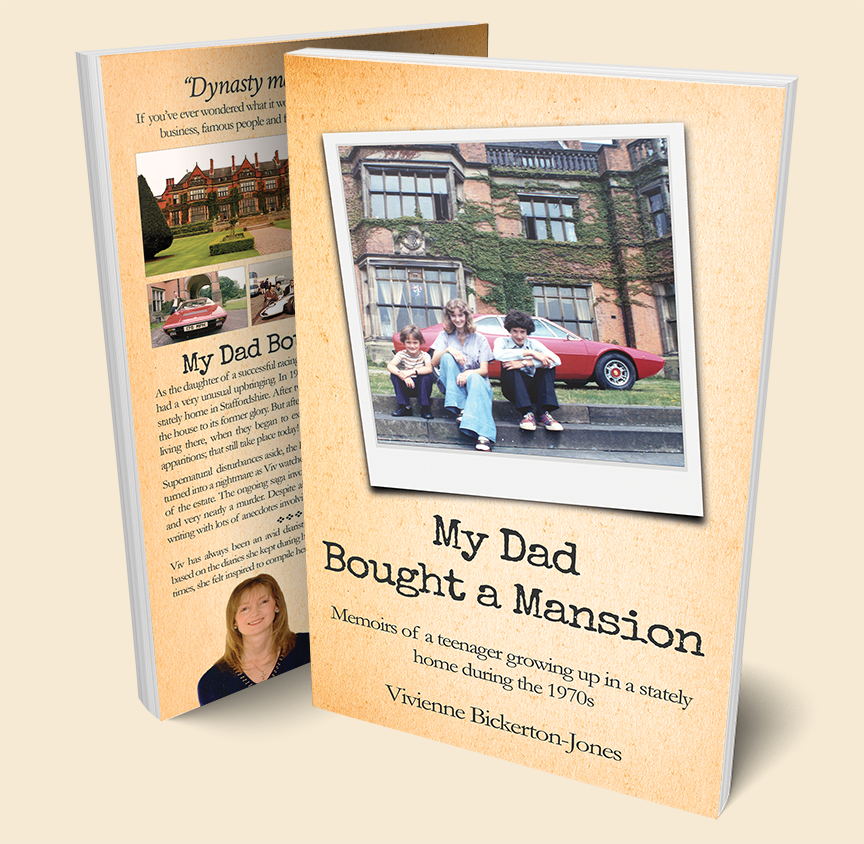
OUT NOW!!! 'My Dad Bought a Mansion' is out in book form on Amazon - all my memoirs packed with lots of photographs from the times. Go check it out and let me know what you think!
Would make a great gift!
Leave a comment Like Back to Top Seen 2.1K times Liked 1 times
Subscribe to Updates
If you enjoyed this, why not subscribe to free email updates and join over 353 subscribers today!
Subscribe to Story updates
Alternatively, you can subscribe via RSS 
All email subscriptions must be confirmed to comply with GDPR.
Related Posts
Viv Wilson | 29th October 2025 | Growing Up In a Stately Home
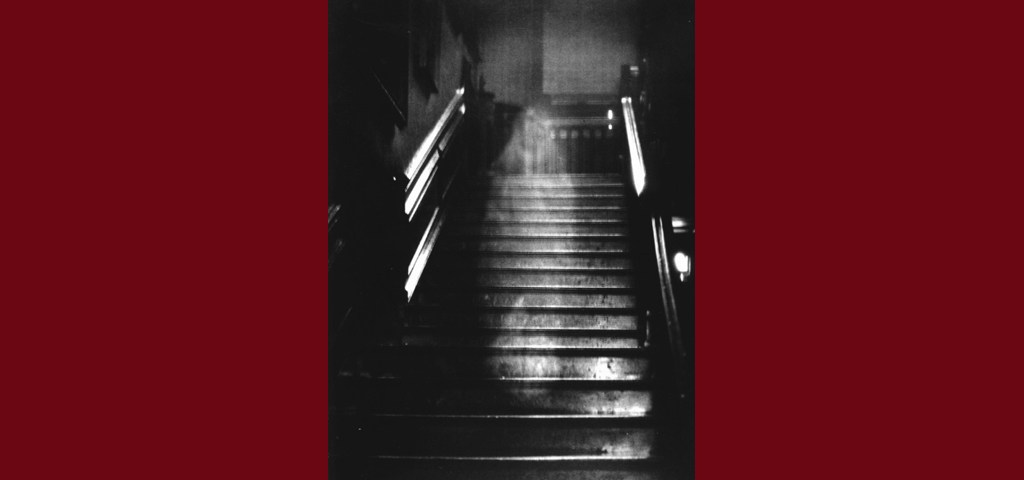
Going to sleep in a big old house is quite scary when you’re young but going to sleep in a big old house that’s haunted is even more scary!! As we approach Hallowe'en my mind has gone back to that first winter at Hoar Cross Hall and all the scary things that happened - and that was without any trick or treaters in those days! We quickly realised that we weren’t the only inhabitants of the house when we moved there in the 1970s. Every time there was a windy night I could hear a window banging in the attic – all night long it kept me awake. The next day I would go upstairs to the attics to close it but there would be no windows open or even loose. They were all tightly shut as they had been for the previous 20 years, when the house had stood empty. I remember standing there in the attic rooms feeling a tingling down my spine and goose bumps all over as I felt the atmosphere closing in on me - and I quickly legged it back downstairs! On other nights we would hear people walking along the attic corridor (the attic, by the way, was the floor right above our bedroom floor) and then at other times we could hear heavy furniture being dragged about – yet there was nothing up there as the rooms were all empty! How strange! Other members of the family heard it too and also people that stayed overnight, so it wasn’t the imaginings of a frightened child. There was also nobody else in the house at that point, apart from our family and they definitely weren’t walking about the house at 3am. And why is it that these things always happen in the middle of the night? When it’s dark. When we feel most scared? I often woke up at 3am whether there were noises or not – or perhaps there had been a noise and that’s what had woken me up – who knows? I also loved reading books about old houses, mysteries and ghosts but when you actually live in one in real life, it’s a bit different! The spooky attic The first few years at Hoar Cross Hall were the worst ones for spiritual activity - maybe we'd disturbed the ghosts who were used to an empty house and not one with children running about everywhere! Our family consisted of my mother, father and two younger brothers; my parents being members of the Historical Society were keen to buy a house to show my dad's huge arms and armour collection along with many antiques. But we hadn't bargained with the house being haunted! My mum was often woken up by the sight of a little girl ‘floating’ over the bed. She said the girl was wearing a long nightdress and mop cap and seemed to be stretching her arms out to my mum as if she was asking for help. She floated all around the bed scaring my mum half to death. Frantically she tried to wake my dad while the ghoulish girl reached out - by the time my dad was awake the child was fading away and he missed it all! If you haven’t already worked it out, long nighties and mop caps were the ‘go to’ fashion trend back in the Victorian days! She saw her a few times on the staircase too just standing in the corridor before fading away. This made me terrified to go upstairs to bed on my own and once inside my room I would lock the doors and burrow down under the blankets so I wouldn't see or hear anything - quite forgetting that ghosts can walk through walls! The haunted bedroom corridor When I got older it was great to have parties in the attics as we could play our rock music really loud and no-one would hear it! My dad had made the west wing of the house (the old Victorian nurseries) into an apartment which we rented out and it was here that my 18th birthday was celebrated as we had become friends with the people that lived there. As everyone had heard about the ghost stories at the Hall, we made an ouija board and tried to contact the spirits. Most people had had a few spirits of a different kind by then and we sat around the table watching the glass move aroun...
Viv Wilson | 24th September 2025 | Growing Up In a Stately Home
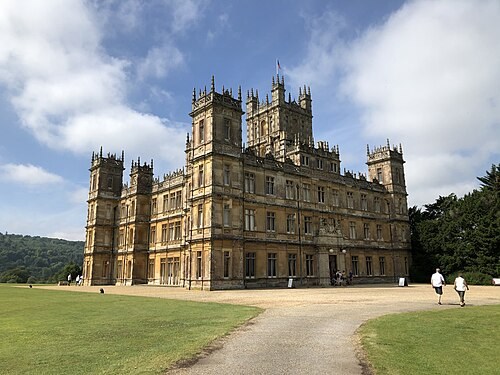
With the new Downton Abbey film out this month I thought I would do a comparison of the two family homes, Downton and Hoar Cross Hall, the latter being my old family home for those of you who are new to these blogs. Although Downton Abbey is fictional, the house on which it is based is not, it being Highclere Castle in Hampshire which was built in 1679 and is owned by the Earl of Carnarvon. Hoar Cross Hall was the original home of the Meynell Ingram family who first came from Leicestershire and was built in 1863. Hugo Meynell of Quorndon was the High Sheriff of Staffordshire and Member of Parliament for Lichfield and the family owned considerable property in Staffordshire, Shropshire and Derbyshire. He bought the Hoar Cross estate in 1793 and built a hunting lodge there known as Old Hall and founded the Meynell Hunt. It seemed the family lived here for many years until Hugo’s grandson, also Hugo, got married in 1863 and decided to build the present Hall for him and his wife, Emily Charlotte. The house took nine years to build and was eventually finished in 1871. Hugo and Emily had already moved in, but their new life together was soon to be cut short by a tragic accident. Fourteen months earlier at Birch Wood on their estate Hugo had a horse riding accident and had been bed-ridden ever since – he died in May of that year. They had no children and Emily built The Church of the Holy Angels in the grounds of the hall in memory of her husband. This is the church that I got married in over a hundred years later. On Hugo’s death Emily inherited the family's many large estates and they say she was a double millionairess – which in those days was a huge amount of money! Emily Charlotte The original site of Highclere Castle was recorded in the Doomsday Book of 1086 when an Anglo-Saxon king granted the estate to the Bishops of Winchester and in the 14th century a palace was built there by the Bishop. However, it was confiscated during the Reformation by Henry VIII. Later it was rebuilt in 1679 by Sir Robert Sawyer, Attorney-General to Charles II and looks to have stayed in his family ever since. The Downton Abbey story seems to be very similar to the Highclere Castle one actually! In the early part of the 20th century Downton is owned by the Earl of Grantham who marries an American heiress to save the family home. At about the same time Highclere was owned by the Earl of Carnarvon who also married the heiress to the Rothschild fortune and received a very large dowry. (In case you're wondering, a dowry is a sum of money or property given by the bride's family to the groom's family upon their marriage, and has historically been practiced by various cultures over the years). During the First World War, Highclere opened the house up as a hospital with the then Lady Carnarvon assisting as a nurse. In the Downton story Lord Grantham opens up the house to be used as a hospital for injured officers and some of the family assist in nursing them back to health. The Meynell family at Hoar Cross Hall also offered their home to be used as a hospital but were told that it was unsuitable owing to its isolation and inaccessibility in the country. However, Lady Mary Meynell opened her London home in Lennox Gardens to be used as a Military Hospital for officers during the First World War. Indeed, her own son, Francis, stayed there for a while recovering from severe wounds to the back in 1917, something which he never really recovered from resulting in his early death in 1941 at the age of 52. Hoar Cross Hall was too remote Although these aristocratic families seemed to live very charmed lives (and a lot of them did!) they also ran their estates to provide food and farm the land. This also gave local people much needed employment although being a domestic servant in those days could be quite hard with long hours and not much down time. However, they were families like the rest of us with the...
Viv Wilson | 19th August 2025 | Growing Up In a Stately Home
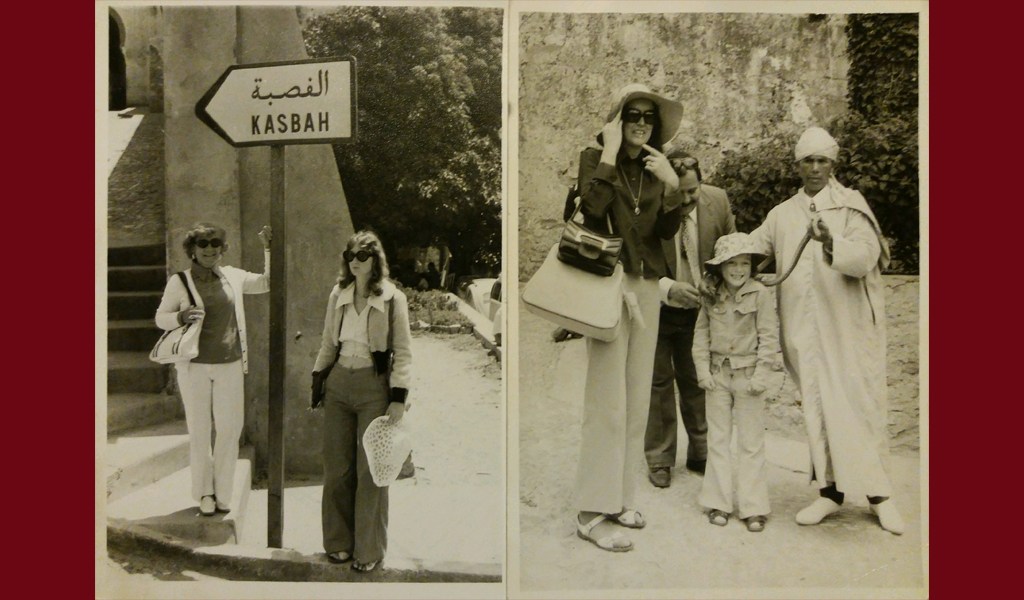
When Hugo and Emily Meynell built Hoar Cross Hall it included a whole estate with it, namely kitchen gardens, greenhouses, stables, a farm and cottages. This was quite common in those days as the estate supported the house with food etc and also gave employment to local people. Old Hall (their original home) was also on the estate and was accessed via a private road, which ran from the main road. By the time the 1970s came along the stable block and Old Hall were private houses and another part of Old Hall had been made into a children’s home. Emily Meynell had started this home in the Victorian days, calling it ‘The Home of the Good Shepherd’ but it was for boys only at that time. When we were there it was a mixed home and run by a husband and wife couple. They used to have fetes there in the summer and we would sometimes go round to play with the children, as they had lots of climbing frames and slides. The private road also joined up to our woods near the driveway and this is the road I walked along every day, up to the main road, to catch the bus to school in nearby Uttoxeter. It was about half a mile but I hated walking through the woods, especially in the winter when the mornings were darker. One day, whilst walking round Uttoxeter at lunchtime, I saw a newspaper board telling everyone about a streaker that had run through the town the day before – what was this? A man running naked for the fun of it? On further investigation I found that this was the latest craze from America – but why anyone would want to do it in our cold country was beyond me! Streaking comes to Britain! I was not an academic by any means and hated my schooldays. I was constantly being teased for being too thin, too quiet or for living in a stately home. (This was from the teachers too!) so when it was time for 'skools out for summer' I was more than ready to leave! By now the Mediaeval Banquets, which my parents ran in the house, were proving a huge success and as package holidays were becoming very popular my parents decided to book a two week holiday abroad. My dad had always wanted to go to Greece to see all the temples but was a bit disappointed when he got there. Most of the temples were in ruins and once you’ve seen one ruin you’ve pretty much seen them all! The Acropolis was quite impressive though. I loved being abroad – the weather was so hot and the sea was always warm. Cold climes don’t suit me as I feel the cold so much so I would always be outdoors as soon as the sun was out - most of my summer holidays were spent in the gardens weeding whilst listening to Radio 1 on my little portable radio, although usually I dreaded the school holidays as it meant I was stuck at home for six weeks, rarely seeing my friends. Ticket to the bullfight Because of the success of the banquets it meant we could go abroad every year and other holidays included trips to Majorca, Portugal and Spain. I remember in Majorca going on a lovely train ride through orange groves and gardens to the Caves of Drach – the scenery was stunning with mountains watching over us from their great height. In Portugal we went to see a bull fight which I found both thrilling and frightening all at once. The matadors came so close to the bull but I hated that they had to stab them first to make them angry – it seemed so cruel. In Spain we went to a club one night to see some flamenco dancing and they pulled me up onto the stage to join in which was fun, if unexpected! We also went on a day trip to Morocco and walked around the Kasbah, which was the local market (see header picture). I remember hoards of children following us around trying to sell us things. My dad noticed one of the stallholders smiling at me and said for a joke “You can have her for two camels”. Well, the man never left our side after that – he took it very seriously and followed us all round the market trying to n...
Viv Wilson | 25th June 2025 | Growing Up In a Stately Home

With the summer season well and truly upon us and Wimbledon almost here, I thought a blog about tennis might be in order! The game of tennis first started in the Mediaeval days and involved hitting a ball with a bare hand and later with a glove. By the 16th century the glove had become a racquet and the game had moved to an enclosed playing area and the rules had stabilized. This was known as ‘real tennis’. The word tennis came into use in English in the mid-14th century from French, via the Anglo-Norman term Tenez, which can be translated as 'hold', 'receive' or 'take', a call from the server to his opponent indicating that he is about to serve. It seems that royalty and the upper classes played tennis a lot, with Henry VIII making the biggest impact as a young monarch, playing the game with gusto at Hampton Court! However, the game was actually invented in Birmingham (England) and is the direct descendant of what is now denoted ‘real tennis’ or ‘royal tennis’ and continues to be played today with more complex rules. Many original courts still remain at Oxford, Cambridge, Falkland Palace in Fife, Scotland and Hampton Court Palace. Wimbledon itself is the oldest tennis tournament in the world and arguably the most famous. Since the first tournament 148 years ago in 1877, The Championships have been hosted by the All England Lawn Tennis and Croquet Club in Wimbledon, London and take place over two weeks in late June – early July. Tennis became popular because of the waning interest in croquet and the Club decided to organise a tennis tournament to pay for the repair of its pony roller, used to maintain the lawns. It must have been popular as its still going strong! Although you may enjoy the tennis I think people love the strawberries and cream too that are famously served there! Or you may like a tour around the museum - check it out here Wimbledon Many stately homes would have had tennis courts including Hoar Cross Hall. However, when we moved there in the 1970s you couldn’t see them at all as the grass had grown long and wild and it looked liked a wilderness. In fact, we didn’t even know that there were tennis courts there until Mrs Meynell, the previous owner, told us! Mowing the old tennis courts in 1984 Of course, back in the 1930s the younger members of the Meynell family often played on them during their weekend house parties (see header picture). One young man who became a close friend of the Meynell family made regular visits to Hoar Cross and recalled the happy times he spent there as “.....the last days of the traditional English country house with weekend parties full of gracious living and good company.” The people who came to the parties were usually young aristocrats such as Lady Diana Legge and her sister Lady Elisabeth Bassett, who was lady-in-waiting to the Queen Mother from 1959 – 1993, when she retired at the age of 85! (see below) Lady Elizabeth (in the dark dress) Am-dram at a weekend house party on the tennis courts! I remember Mrs Meynell recalling a funny story about when they moved out of the Hall to a smaller house in the neighbouring village. Apparently her husband had come home one day to tell her he’d bought the house (without even consulting her) and the reason was that it had hard tennis courts, 'so much better than our grass ones' he told her! How different things were in those days – however, the servants were very pleased about the move as it meant less rooms to clean! And also less mowing now that they had hard courts! Don't miss next month's blog: 'Summer Balls and Garden Parties' If you would like to follow my story from the beginning, please click here and feel free to share with your friends.Follow me on a personal tour of my childhood home on YouTube. Click here to view and subscribe to my channel.OUT NOW!! 'My Dad Bought a Mansion' book is available on Amazon....
Viv Wilson | 29th October 2025 | Growing Up In a Stately Home
Going to sleep in a big old house is quite scary when you’re young but going to sleep in a big old house that’s haunted is even more scary!! As we approach Hallowe'en my mind has gone back to that first winter at Hoar Cross Hall and all the scary things that happened - and that was without any trick or treaters in those days! We quickly realised that we weren’t the only inhabitants of the house when we moved there in the 1970s. Every time there was a windy night I could hear a window banging in the attic – all night long it kept me awake. The next day I would go upstairs to the attics to close it but there would be no windows open or even loose. They were all tightly shut as they had been for the previous 20 years, when the house had stood empty. I remember standing there in the attic rooms feeling a tingling down my spine and goose bumps all over as I felt the atmosphere closing in on me - and I quickly legged it back downstairs! On other nights we would hear people walking along the attic corridor (the attic, by the way, was the floor right above our bedroom floor) and then at other times we could hear heavy furniture being dragged about – yet there was nothing up there as the rooms were all empty! How strange! Other members of the family heard it too and also people that stayed overnight, so it wasn’t the imaginings of a frightened child. There was also nobody else in the house at that point, apart from our family and they definitely weren’t walking about the house at 3am. And why is it that these things always happen in the middle of the night? When it’s dark. When we feel most scared? I often woke up at 3am whether there were noises or not – or perhaps there had been a noise and that’s what had woken me up – who knows? I also loved reading books about old houses, mysteries and ghosts but when you actually live in one in real life, it’s a bit different! The spooky attic The first few years at Hoar Cross Hall were the worst ones for spiritual activity - maybe we'd disturbed the ghosts who were used to an empty house and not one with children running about everywhere! Our family consisted of my mother, father and two younger brothers; my parents being members of the Historical Society were keen to buy a house to show my dad's huge arms and armour collection along with many antiques. But we hadn't bargained with the house being haunted! My mum was often woken up by the sight of a little girl ‘floating’ over the bed. She said the girl was wearing a long nightdress and mop cap and seemed to be stretching her arms out to my mum as if she was asking for help. She floated all around the bed scaring my mum half to death. Frantically she tried to wake my dad while the ghoulish girl reached out - by the time my dad was awake the child was fading away and he missed it all! If you haven’t already worked it out, long nighties and mop caps were the ‘go to’ fashion trend back in the Victorian days! She saw her a few times on the staircase too just standing in the corridor before fading away. This made me terrified to go upstairs to bed on my own and once inside my room I would lock the doors and burrow down under the blankets so I wouldn't see or hear anything - quite forgetting that ghosts can walk through walls! The haunted bedroom corridor When I got older it was great to have parties in the attics as we could play our rock music really loud and no-one would hear it! My dad had made the west wing of the house (the old Victorian nurseries) into an apartment which we rented out and it was here that my 18th birthday was celebrated as we had become friends with the people that lived there. As everyone had heard about the ghost stories at the Hall, we made an ouija board and tried to contact the spirits. Most people had had a few spirits of a different kind by then and we sat around the table watching the glass move aroun...
Viv Wilson | 24th September 2025 | Growing Up In a Stately Home
With the new Downton Abbey film out this month I thought I would do a comparison of the two family homes, Downton and Hoar Cross Hall, the latter being my old family home for those of you who are new to these blogs. Although Downton Abbey is fictional, the house on which it is based is not, it being Highclere Castle in Hampshire which was built in 1679 and is owned by the Earl of Carnarvon. Hoar Cross Hall was the original home of the Meynell Ingram family who first came from Leicestershire and was built in 1863. Hugo Meynell of Quorndon was the High Sheriff of Staffordshire and Member of Parliament for Lichfield and the family owned considerable property in Staffordshire, Shropshire and Derbyshire. He bought the Hoar Cross estate in 1793 and built a hunting lodge there known as Old Hall and founded the Meynell Hunt. It seemed the family lived here for many years until Hugo’s grandson, also Hugo, got married in 1863 and decided to build the present Hall for him and his wife, Emily Charlotte. The house took nine years to build and was eventually finished in 1871. Hugo and Emily had already moved in, but their new life together was soon to be cut short by a tragic accident. Fourteen months earlier at Birch Wood on their estate Hugo had a horse riding accident and had been bed-ridden ever since – he died in May of that year. They had no children and Emily built The Church of the Holy Angels in the grounds of the hall in memory of her husband. This is the church that I got married in over a hundred years later. On Hugo’s death Emily inherited the family's many large estates and they say she was a double millionairess – which in those days was a huge amount of money! Emily Charlotte The original site of Highclere Castle was recorded in the Doomsday Book of 1086 when an Anglo-Saxon king granted the estate to the Bishops of Winchester and in the 14th century a palace was built there by the Bishop. However, it was confiscated during the Reformation by Henry VIII. Later it was rebuilt in 1679 by Sir Robert Sawyer, Attorney-General to Charles II and looks to have stayed in his family ever since. The Downton Abbey story seems to be very similar to the Highclere Castle one actually! In the early part of the 20th century Downton is owned by the Earl of Grantham who marries an American heiress to save the family home. At about the same time Highclere was owned by the Earl of Carnarvon who also married the heiress to the Rothschild fortune and received a very large dowry. (In case you're wondering, a dowry is a sum of money or property given by the bride's family to the groom's family upon their marriage, and has historically been practiced by various cultures over the years). During the First World War, Highclere opened the house up as a hospital with the then Lady Carnarvon assisting as a nurse. In the Downton story Lord Grantham opens up the house to be used as a hospital for injured officers and some of the family assist in nursing them back to health. The Meynell family at Hoar Cross Hall also offered their home to be used as a hospital but were told that it was unsuitable owing to its isolation and inaccessibility in the country. However, Lady Mary Meynell opened her London home in Lennox Gardens to be used as a Military Hospital for officers during the First World War. Indeed, her own son, Francis, stayed there for a while recovering from severe wounds to the back in 1917, something which he never really recovered from resulting in his early death in 1941 at the age of 52. Hoar Cross Hall was too remote Although these aristocratic families seemed to live very charmed lives (and a lot of them did!) they also ran their estates to provide food and farm the land. This also gave local people much needed employment although being a domestic servant in those days could be quite hard with long hours and not much down time. However, they were families like the rest of us with the...
Viv Wilson | 19th August 2025 | Growing Up In a Stately Home
When Hugo and Emily Meynell built Hoar Cross Hall it included a whole estate with it, namely kitchen gardens, greenhouses, stables, a farm and cottages. This was quite common in those days as the estate supported the house with food etc and also gave employment to local people. Old Hall (their original home) was also on the estate and was accessed via a private road, which ran from the main road. By the time the 1970s came along the stable block and Old Hall were private houses and another part of Old Hall had been made into a children’s home. Emily Meynell had started this home in the Victorian days, calling it ‘The Home of the Good Shepherd’ but it was for boys only at that time. When we were there it was a mixed home and run by a husband and wife couple. They used to have fetes there in the summer and we would sometimes go round to play with the children, as they had lots of climbing frames and slides. The private road also joined up to our woods near the driveway and this is the road I walked along every day, up to the main road, to catch the bus to school in nearby Uttoxeter. It was about half a mile but I hated walking through the woods, especially in the winter when the mornings were darker. One day, whilst walking round Uttoxeter at lunchtime, I saw a newspaper board telling everyone about a streaker that had run through the town the day before – what was this? A man running naked for the fun of it? On further investigation I found that this was the latest craze from America – but why anyone would want to do it in our cold country was beyond me! Streaking comes to Britain! I was not an academic by any means and hated my schooldays. I was constantly being teased for being too thin, too quiet or for living in a stately home. (This was from the teachers too!) so when it was time for 'skools out for summer' I was more than ready to leave! By now the Mediaeval Banquets, which my parents ran in the house, were proving a huge success and as package holidays were becoming very popular my parents decided to book a two week holiday abroad. My dad had always wanted to go to Greece to see all the temples but was a bit disappointed when he got there. Most of the temples were in ruins and once you’ve seen one ruin you’ve pretty much seen them all! The Acropolis was quite impressive though. I loved being abroad – the weather was so hot and the sea was always warm. Cold climes don’t suit me as I feel the cold so much so I would always be outdoors as soon as the sun was out - most of my summer holidays were spent in the gardens weeding whilst listening to Radio 1 on my little portable radio, although usually I dreaded the school holidays as it meant I was stuck at home for six weeks, rarely seeing my friends. Ticket to the bullfight Because of the success of the banquets it meant we could go abroad every year and other holidays included trips to Majorca, Portugal and Spain. I remember in Majorca going on a lovely train ride through orange groves and gardens to the Caves of Drach – the scenery was stunning with mountains watching over us from their great height. In Portugal we went to see a bull fight which I found both thrilling and frightening all at once. The matadors came so close to the bull but I hated that they had to stab them first to make them angry – it seemed so cruel. In Spain we went to a club one night to see some flamenco dancing and they pulled me up onto the stage to join in which was fun, if unexpected! We also went on a day trip to Morocco and walked around the Kasbah, which was the local market (see header picture). I remember hoards of children following us around trying to sell us things. My dad noticed one of the stallholders smiling at me and said for a joke “You can have her for two camels”. Well, the man never left our side after that – he took it very seriously and followed us all round the market trying to n...
Viv Wilson | 25th June 2025 | Growing Up In a Stately Home
With the summer season well and truly upon us and Wimbledon almost here, I thought a blog about tennis might be in order! The game of tennis first started in the Mediaeval days and involved hitting a ball with a bare hand and later with a glove. By the 16th century the glove had become a racquet and the game had moved to an enclosed playing area and the rules had stabilized. This was known as ‘real tennis’. The word tennis came into use in English in the mid-14th century from French, via the Anglo-Norman term Tenez, which can be translated as 'hold', 'receive' or 'take', a call from the server to his opponent indicating that he is about to serve. It seems that royalty and the upper classes played tennis a lot, with Henry VIII making the biggest impact as a young monarch, playing the game with gusto at Hampton Court! However, the game was actually invented in Birmingham (England) and is the direct descendant of what is now denoted ‘real tennis’ or ‘royal tennis’ and continues to be played today with more complex rules. Many original courts still remain at Oxford, Cambridge, Falkland Palace in Fife, Scotland and Hampton Court Palace. Wimbledon itself is the oldest tennis tournament in the world and arguably the most famous. Since the first tournament 148 years ago in 1877, The Championships have been hosted by the All England Lawn Tennis and Croquet Club in Wimbledon, London and take place over two weeks in late June – early July. Tennis became popular because of the waning interest in croquet and the Club decided to organise a tennis tournament to pay for the repair of its pony roller, used to maintain the lawns. It must have been popular as its still going strong! Although you may enjoy the tennis I think people love the strawberries and cream too that are famously served there! Or you may like a tour around the museum - check it out here Wimbledon Many stately homes would have had tennis courts including Hoar Cross Hall. However, when we moved there in the 1970s you couldn’t see them at all as the grass had grown long and wild and it looked liked a wilderness. In fact, we didn’t even know that there were tennis courts there until Mrs Meynell, the previous owner, told us! Mowing the old tennis courts in 1984 Of course, back in the 1930s the younger members of the Meynell family often played on them during their weekend house parties (see header picture). One young man who became a close friend of the Meynell family made regular visits to Hoar Cross and recalled the happy times he spent there as “.....the last days of the traditional English country house with weekend parties full of gracious living and good company.” The people who came to the parties were usually young aristocrats such as Lady Diana Legge and her sister Lady Elisabeth Bassett, who was lady-in-waiting to the Queen Mother from 1959 – 1993, when she retired at the age of 85! (see below) Lady Elizabeth (in the dark dress) Am-dram at a weekend house party on the tennis courts! I remember Mrs Meynell recalling a funny story about when they moved out of the Hall to a smaller house in the neighbouring village. Apparently her husband had come home one day to tell her he’d bought the house (without even consulting her) and the reason was that it had hard tennis courts, 'so much better than our grass ones' he told her! How different things were in those days – however, the servants were very pleased about the move as it meant less rooms to clean! And also less mowing now that they had hard courts! Don't miss next month's blog: 'Summer Balls and Garden Parties' If you would like to follow my story from the beginning, please click here and feel free to share with your friends.Follow me on a personal tour of my childhood home on YouTube. Click here to view and subscribe to my channel.OUT NOW!! 'My Dad Bought a Mansion' book is available on Amazon....
Recent Posts
Viv Wilson | 29th October 2025 | Growing Up In a Stately Home
Going to sleep in a big old house is quite scary when you’re young but going to sleep in a big old house that’s haunted is even more scary!! As we approach Hallowe'en my mind has gone back to that first winter at Hoar Cross Hall and all the scary things that happened - and that was without any trick or treaters in those days! We quickly realised that we weren’t the only inhabitants of the house when we moved there in the 1970s. Every time there was a windy night I could hear a window banging in the attic – all night long it kept me awake. The next day I would go upstairs to the attics to close it but there would be no windows open or even loose. They were all tightly shut as they had been for the previous 20 years, when the house had stood empty. I remember standing there in the attic rooms feeling a tingling down my spine and goose bumps all over as I felt the atmosphere closing in on me - and I quickly legged it back downstairs! On other nights we would hear people walking along the attic corridor (the attic, by the way, was the floor right above our bedroom floor) and then at other times we could hear heavy furniture being dragged about – yet there was nothing up there as the rooms were all empty! How strange! Other members of the family heard it too and also people that stayed overnight, so it wasn’t the imaginings of a frightened child. There was also nobody else in the house at that point, apart from our family and they definitely weren’t walking about the house at 3am. And why is it that these things always happen in the middle of the night? When it’s dark. When we feel most scared? I often woke up at 3am whether there were noises or not – or perhaps there had been a noise and that’s what had woken me up – who knows? I also loved reading books about old houses, mysteries and ghosts but when you actually live in one in real life, it’s a bit different! The spooky attic The first few years at Hoar Cross Hall were the worst ones for spiritual activity - maybe we'd disturbed the ghosts who were used to an empty house and not one with children running about everywhere! Our family consisted of my mother, father and two younger brothers; my parents being members of the Historical Society were keen to buy a house to show my dad's huge arms and armour collection along with many antiques. But we hadn't bargained with the house being haunted! My mum was often woken up by the sight of a little girl ‘floating’ over the bed. She said the girl was wearing a long nightdress and mop cap and seemed to be stretching her arms out to my mum as if she was asking for help. She floated all around the bed scaring my mum half to death. Frantically she tried to wake my dad while the ghoulish girl reached out - by the time my dad was awake the child was fading away and he missed it all! If you haven’t already worked it out, long nighties and mop caps were the ‘go to’ fashion trend back in the Victorian days! She saw her a few times on the staircase too just standing in the corridor before fading away. This made me terrified to go upstairs to bed on my own and once inside my room I would lock the doors and burrow down under the blankets so I wouldn't see or hear anything - quite forgetting that ghosts can walk through walls! The haunted bedroom corridor When I got older it was great to have parties in the attics as we could play our rock music really loud and no-one would hear it! My dad had made the west wing of the house (the old Victorian nurseries) into an apartment which we rented out and it was here that my 18th birthday was celebrated as we had become friends with the people that lived there. As everyone had heard about the ghost stories at the Hall, we made an ouija board and tried to contact the spirits. Most people had had a few spirits of a different kind by then and we sat around the table watching the glass move aroun...
Viv Wilson | 24th September 2025 | Growing Up In a Stately Home
With the new Downton Abbey film out this month I thought I would do a comparison of the two family homes, Downton and Hoar Cross Hall, the latter being my old family home for those of you who are new to these blogs. Although Downton Abbey is fictional, the house on which it is based is not, it being Highclere Castle in Hampshire which was built in 1679 and is owned by the Earl of Carnarvon. Hoar Cross Hall was the original home of the Meynell Ingram family who first came from Leicestershire and was built in 1863. Hugo Meynell of Quorndon was the High Sheriff of Staffordshire and Member of Parliament for Lichfield and the family owned considerable property in Staffordshire, Shropshire and Derbyshire. He bought the Hoar Cross estate in 1793 and built a hunting lodge there known as Old Hall and founded the Meynell Hunt. It seemed the family lived here for many years until Hugo’s grandson, also Hugo, got married in 1863 and decided to build the present Hall for him and his wife, Emily Charlotte. The house took nine years to build and was eventually finished in 1871. Hugo and Emily had already moved in, but their new life together was soon to be cut short by a tragic accident. Fourteen months earlier at Birch Wood on their estate Hugo had a horse riding accident and had been bed-ridden ever since – he died in May of that year. They had no children and Emily built The Church of the Holy Angels in the grounds of the hall in memory of her husband. This is the church that I got married in over a hundred years later. On Hugo’s death Emily inherited the family's many large estates and they say she was a double millionairess – which in those days was a huge amount of money! Emily Charlotte The original site of Highclere Castle was recorded in the Doomsday Book of 1086 when an Anglo-Saxon king granted the estate to the Bishops of Winchester and in the 14th century a palace was built there by the Bishop. However, it was confiscated during the Reformation by Henry VIII. Later it was rebuilt in 1679 by Sir Robert Sawyer, Attorney-General to Charles II and looks to have stayed in his family ever since. The Downton Abbey story seems to be very similar to the Highclere Castle one actually! In the early part of the 20th century Downton is owned by the Earl of Grantham who marries an American heiress to save the family home. At about the same time Highclere was owned by the Earl of Carnarvon who also married the heiress to the Rothschild fortune and received a very large dowry. (In case you're wondering, a dowry is a sum of money or property given by the bride's family to the groom's family upon their marriage, and has historically been practiced by various cultures over the years). During the First World War, Highclere opened the house up as a hospital with the then Lady Carnarvon assisting as a nurse. In the Downton story Lord Grantham opens up the house to be used as a hospital for injured officers and some of the family assist in nursing them back to health. The Meynell family at Hoar Cross Hall also offered their home to be used as a hospital but were told that it was unsuitable owing to its isolation and inaccessibility in the country. However, Lady Mary Meynell opened her London home in Lennox Gardens to be used as a Military Hospital for officers during the First World War. Indeed, her own son, Francis, stayed there for a while recovering from severe wounds to the back in 1917, something which he never really recovered from resulting in his early death in 1941 at the age of 52. Hoar Cross Hall was too remote Although these aristocratic families seemed to live very charmed lives (and a lot of them did!) they also ran their estates to provide food and farm the land. This also gave local people much needed employment although being a domestic servant in those days could be quite hard with long hours and not much down time. However, they were families like the rest of us with the...
Viv Wilson | 19th August 2025 | Growing Up In a Stately Home
When Hugo and Emily Meynell built Hoar Cross Hall it included a whole estate with it, namely kitchen gardens, greenhouses, stables, a farm and cottages. This was quite common in those days as the estate supported the house with food etc and also gave employment to local people. Old Hall (their original home) was also on the estate and was accessed via a private road, which ran from the main road. By the time the 1970s came along the stable block and Old Hall were private houses and another part of Old Hall had been made into a children’s home. Emily Meynell had started this home in the Victorian days, calling it ‘The Home of the Good Shepherd’ but it was for boys only at that time. When we were there it was a mixed home and run by a husband and wife couple. They used to have fetes there in the summer and we would sometimes go round to play with the children, as they had lots of climbing frames and slides. The private road also joined up to our woods near the driveway and this is the road I walked along every day, up to the main road, to catch the bus to school in nearby Uttoxeter. It was about half a mile but I hated walking through the woods, especially in the winter when the mornings were darker. One day, whilst walking round Uttoxeter at lunchtime, I saw a newspaper board telling everyone about a streaker that had run through the town the day before – what was this? A man running naked for the fun of it? On further investigation I found that this was the latest craze from America – but why anyone would want to do it in our cold country was beyond me! Streaking comes to Britain! I was not an academic by any means and hated my schooldays. I was constantly being teased for being too thin, too quiet or for living in a stately home. (This was from the teachers too!) so when it was time for 'skools out for summer' I was more than ready to leave! By now the Mediaeval Banquets, which my parents ran in the house, were proving a huge success and as package holidays were becoming very popular my parents decided to book a two week holiday abroad. My dad had always wanted to go to Greece to see all the temples but was a bit disappointed when he got there. Most of the temples were in ruins and once you’ve seen one ruin you’ve pretty much seen them all! The Acropolis was quite impressive though. I loved being abroad – the weather was so hot and the sea was always warm. Cold climes don’t suit me as I feel the cold so much so I would always be outdoors as soon as the sun was out - most of my summer holidays were spent in the gardens weeding whilst listening to Radio 1 on my little portable radio, although usually I dreaded the school holidays as it meant I was stuck at home for six weeks, rarely seeing my friends. Ticket to the bullfight Because of the success of the banquets it meant we could go abroad every year and other holidays included trips to Majorca, Portugal and Spain. I remember in Majorca going on a lovely train ride through orange groves and gardens to the Caves of Drach – the scenery was stunning with mountains watching over us from their great height. In Portugal we went to see a bull fight which I found both thrilling and frightening all at once. The matadors came so close to the bull but I hated that they had to stab them first to make them angry – it seemed so cruel. In Spain we went to a club one night to see some flamenco dancing and they pulled me up onto the stage to join in which was fun, if unexpected! We also went on a day trip to Morocco and walked around the Kasbah, which was the local market (see header picture). I remember hoards of children following us around trying to sell us things. My dad noticed one of the stallholders smiling at me and said for a joke “You can have her for two camels”. Well, the man never left our side after that – he took it very seriously and followed us all round the market trying to n...
Viv Wilson | 25th June 2025 | Growing Up In a Stately Home
With the summer season well and truly upon us and Wimbledon almost here, I thought a blog about tennis might be in order! The game of tennis first started in the Mediaeval days and involved hitting a ball with a bare hand and later with a glove. By the 16th century the glove had become a racquet and the game had moved to an enclosed playing area and the rules had stabilized. This was known as ‘real tennis’. The word tennis came into use in English in the mid-14th century from French, via the Anglo-Norman term Tenez, which can be translated as 'hold', 'receive' or 'take', a call from the server to his opponent indicating that he is about to serve. It seems that royalty and the upper classes played tennis a lot, with Henry VIII making the biggest impact as a young monarch, playing the game with gusto at Hampton Court! However, the game was actually invented in Birmingham (England) and is the direct descendant of what is now denoted ‘real tennis’ or ‘royal tennis’ and continues to be played today with more complex rules. Many original courts still remain at Oxford, Cambridge, Falkland Palace in Fife, Scotland and Hampton Court Palace. Wimbledon itself is the oldest tennis tournament in the world and arguably the most famous. Since the first tournament 148 years ago in 1877, The Championships have been hosted by the All England Lawn Tennis and Croquet Club in Wimbledon, London and take place over two weeks in late June – early July. Tennis became popular because of the waning interest in croquet and the Club decided to organise a tennis tournament to pay for the repair of its pony roller, used to maintain the lawns. It must have been popular as its still going strong! Although you may enjoy the tennis I think people love the strawberries and cream too that are famously served there! Or you may like a tour around the museum - check it out here Wimbledon Many stately homes would have had tennis courts including Hoar Cross Hall. However, when we moved there in the 1970s you couldn’t see them at all as the grass had grown long and wild and it looked liked a wilderness. In fact, we didn’t even know that there were tennis courts there until Mrs Meynell, the previous owner, told us! Mowing the old tennis courts in 1984 Of course, back in the 1930s the younger members of the Meynell family often played on them during their weekend house parties (see header picture). One young man who became a close friend of the Meynell family made regular visits to Hoar Cross and recalled the happy times he spent there as “.....the last days of the traditional English country house with weekend parties full of gracious living and good company.” The people who came to the parties were usually young aristocrats such as Lady Diana Legge and her sister Lady Elisabeth Bassett, who was lady-in-waiting to the Queen Mother from 1959 – 1993, when she retired at the age of 85! (see below) Lady Elizabeth (in the dark dress) Am-dram at a weekend house party on the tennis courts! I remember Mrs Meynell recalling a funny story about when they moved out of the Hall to a smaller house in the neighbouring village. Apparently her husband had come home one day to tell her he’d bought the house (without even consulting her) and the reason was that it had hard tennis courts, 'so much better than our grass ones' he told her! How different things were in those days – however, the servants were very pleased about the move as it meant less rooms to clean! And also less mowing now that they had hard courts! Don't miss next month's blog: 'Summer Balls and Garden Parties' If you would like to follow my story from the beginning, please click here and feel free to share with your friends.Follow me on a personal tour of my childhood home on YouTube. Click here to view and subscribe to my channel.OUT NOW!! 'My Dad Bought a Mansion' book is available on Amazon....